If I were standing in the shoes of a logistics director responsible for moving thousands of container loads of goods around the world, I’d have no choice but to be concerned about the system I rely on to get these goods from origin to destination, and to make those concerns known far and wide within my organization.
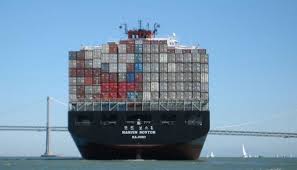
Although port congestion has largely receded in 2015, according to senior carrier executives we’ve spoken to over the past month, and although growth in containerized volumes overall are slowing globally, the reliability of the system and its future prospects don’t inspire confidence. The port operation challenges associated with mega-container ships, which only will grow as dozens of these ships enter service in the next few years, is a key issue pointing to the likelihood that conditions at ports will get worse before they get better.
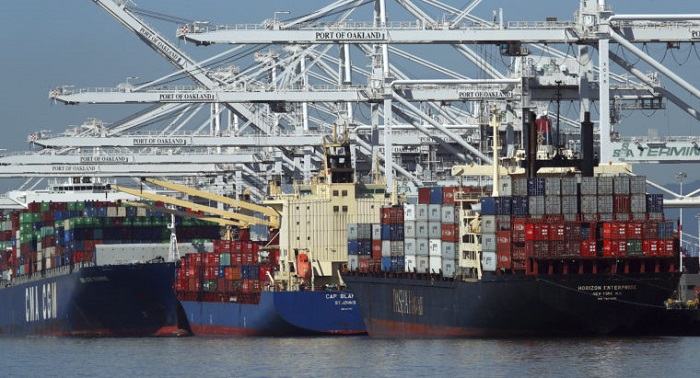

The disconnect is growing between the two to three years it takes for a carrier to order and take delivery of a mega-ship and the decade or more it takes ports to ramp up to handle them. Concerns stemming from port congestion is a reason many container shippers are adding weeks to product lead times, in part because of the need to divert goods to avoid chronic trouble spots such as the U.S. West Coast, and switching manufacturing to nearby locations such as eastern Europe or Mexico to avoid the risks associated with far-flung supply chains.
Exports to western Europe from eastern Europe are now outpacing China’s exports to western Europe, according to Global Trade Information Services, a product that, like JOC.com, is part of IHS Maritime & Trade.
“Ship size has become one of the most burning issues in maritime transport, with repercussions for the whole transport chain,” the Organization of Economic Cooperation and Development said in a recent report addressing challenges with mega-ships.
There may be a belated realization among carriers that there are limits to the cost-saving benefits mega-ships can provide. Some analysts interpreted Maersk Line’s new order for 11 vessels capable of carrying 19,630 TEUs nearly identical hull sizes to their Triple E ships with a bit more capacity squeezed in to be evidence that while there may be a few outliers in the form of 21,000- or even 25,000-TEU ships still to be ordered, the carriers are realizing there may be limits to the value they can derive from ever-larger mega-ships.
This was the key point made by Clarkson’s Martin Stopford at the TPM Conference in March, and it is the subject of the report from the OECD’s International Transport Forum, which led off 110 pages of charts and analysis with the words: “There are cost savings of mega-ships, but these are decreasing and might not even be realized.”
Such are the negative consequences of mega-ships that the report recommends ports seek ways to slow their growth, such as by imposing fees based on ship size to help recover dredging costs. That may be unrealistic given that individual ports will hesitate to do anything that would make them less competitive, and that’s the heart of the problem.
Carriers that have virtually no control over revenue in the commoditized and volatile container shipping market a reality exacerbated by mega-ships believe they have no choice but to pursue savings as the most viable route to profitability, with mega-ships an enticing option that reduces per-container cost.
That container growth rates are slowing and mega-ships can lead to overcapacity and freight rate weakness appears not to be figuring into carrier calculations. The OECD report notes a “complete disconnect of ship size development from developments in the actual economy … The orders for the new generation of container ships have been placed in an economic climate that is generally depressed and at best stagnating.”
The mega-ships also foist huge costs on ports that will do anything to attract the ships, lest they go to a competitor. And the offloading surges and docking queues to which the mega-ships contribute show the carriers to be increasingly out of step with other nodes in the supply chain to the detriment of their own customers and the efficiency of the international trade system itself.
“Container lines have typically not consulted anyone on new mega-ships, before they ordered these,” the OECD report says.
Some say increasing ship sizes and pressures on ports have been a feature of container shipping since the 1960s, and to some extent, that’s true. But as the OECD points out, the growth in ship size is accelerating, raising the pressure for solutions.
Trouble is, there’s no easy way out of the situation the industry finds itself in, with 67 ships of 19,000 TEUs or more currently on order, according to IHS Maritime & Trade. Supply chains will have to adjust before these issues are sorted out.