
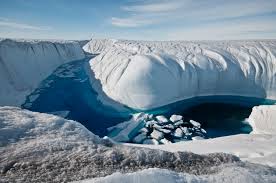


LONDON: By the turn of the 22nd century, the glacial landscape around Mount Everest may be completely different or gone as we know it today.
In a new study published in the journal The Cryosphere, 70-99% of the glaciers in the Everest region in Nepal could melt with the continued rise of the planet’s temperature.
Led by Dr. Joseph Shea, a glacial hydrologist at the International Center for Integrated Mountain Development in Kathmandu, the study revealed that for the past 50 years, the model glacial area decreased by 20%. Should the pattern continue, the ice loss will be massive.
“We did not expect to see glaciers reduced at such a large scale,” Dr. Shea said. “The numbers are quite frightening,” he added.
Dr. Shea and his team applied a glacier mass balance and ice redistribution model to examine the sensitivity of glaciers in the region to climate change, using data from the DudhKoshi basin from 1961-2007.
The team used computer models of predicted change in the climate to assess the pattern of snowfall and seasonal melt in the region, which includes Mount Everest and several of many of the world’s other highest mountains.
“Our results indicate that these glaciers may be highly sensitive to changes in temperature and that increases in precipitation are not enough to offset the increased melt,” Dr. Shea said.
Even with moderately reduced greenhouse emissions, the study projected a loss of 70% of the glaciers while same-level emission rates could result to a 99% loss of the stored ice for the next 85 years.

Karachi Port sets 138-year cargo handling record
KARACHI: Pakistan's maritime sector has achieved a major milestone as Karachi Port set a new record in its 138-year history...


