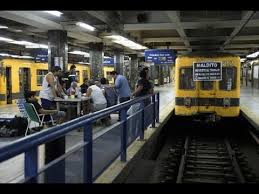
BUENOS AIRES: Pro-government union leaders joined government officials in criticizing the walkout. Industrial action by Argentina’s anti-government trade unions paralyzed buses, trains, the Buenos Aires subway and light rail services.
In an interview on Buenos Aires radio station Radio America, Argentine Labor Minister Carlos Tomada said, “it seems that this is a strike against wage bargaining negotiations, but the sectors that have summoned the strike have not even started negotiating yet.” “This strike is anything but a strike which seeks to defend workers,” Tomada continued. Those who have promoted and organized the action are “striking against the popular government, and not against their employers.” The labor minister said the strike was a political operation, which seeks to benefit the political opposition in an electoral year, arguing that over the past 12 years, the government has consolidated wage bargaining as the mechanism to settle wages and labor conditions. Meanwhile, Argentina’s chief cabinet minister, Anibal Fernandez, stressed the “need for dialogue and negotiation” with the anti-government trade unions that organized the nationwide strike.


In his regular press briefing, Fernandez also called the action a “politically driven strike that has the objective of generating confusion in the population,” which has the sole aim of impeding transportation of “those workers who want to get to their workplace today, which is the vast majority of the population.” Fernandez said that situations like these will not “worry or make us go crazy,” stressing that “those who have summoned this strike will have no other choice than to again sit down at the negotiation table tomorrow.” Pro-government union leaders also joined administration officials in criticizing the walkout. Hugo Yasky, secretary-general of the Argentine Workers Confederation, argued that many groups supporting the strike, which will affect buses, trains, the subway and airlines, were doing so out of self-interest.
“This strike has the implicit support of sectors aligned to special economic interests such as the Argentine Rural Society and other large economic sectors,” he said. Trotskyist political parties have joined the anti-government trade unions – most of which are led by right-wing figures – blocking freeways, highways and bridges leading to the national capital as well as in other strategic arteries around the country and important intersections in downtown Buenos Aires. The nationwide strike could generate losses of between 3 and 11 billion pesos (US$0.3-1.2 billion) in the economy, according to a study by consultancy agency Analytica. According to the firm, the Argentine economy produces goods and services totaling 17 billion pesos per day, of which financial entities and transport generates approximately 1.5 billion pesos, while industry and trade produces 5 billion. The estimate is based on disaggregating the daily income of each activity to the gross domestic product of the country, in order to calculate the losses each sector will face due to the strike.