ABUJA: African officials pledged to create a free-trade zone across half the continent, a bold commitment to dismantle long-standing hurdles to investment in the fast-growing but fragmented region.
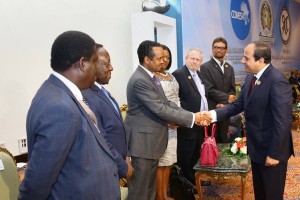
Leaders from 26 countries across Africa’s eastern half from Egypt to South Africa agreed Wednesday to work toward a free-trade zone that would remove tariffs and customs between them.


Their common market, encompassing more than 600 million people today, would link three existing trade zones in southern and East Africa with a combined gross domestic product of $US1.2 trillion.
The existing zones are the East African Community, created in 2000; the Southern African Development Community, founded in 1980; and an overlapping Common Market for Eastern and Southern Africa that also took shape in the 1980s.
Those clubs have made some real economic strides. The EAC, the continent’s most integrated cross-border economy, has fostered a trade spike among its members, Kenya, Rwanda, Tanzania, Burundi and Uganda.
Countries in southern Africa have set common external tariffs. And a handful of small nations effectively share South Africa’s rand, the most liquid and widely traded currency on the continent.
More than $US100 billion in goods passed between members of the three blocs in 2014, a threefold increase from a decade ago, according to documents written by officials drafting the new, larger trade zone to be called the Tripartite Free Trade Area.
Freer trade in the three existing blocs “has resulted in major revisions in the projections of the GDP of the grand free area,” said Calestous Juma, a Kenyan professor at Harvard Kennedy School.
But, tellingly, the continent’s largest economy, Nigeria, will be left out of the new bloc. Nigeria is the anchor of another group called the Economic Community of West African States. Ecowas covers 15 countries and more than 300 million people but has failed to reach many tangible trade agreements.
“Ecowas has been preoccupied mostly with peacekeeping efforts and less with regional trade facilitation,” Mr Juma said. He predicted it might be brought into the new pan-continental trade grouping eventually.
But economists cautioned the multi-decade history of existing trade blocs shows the new, wider market is likely to face years of bargaining and delays before more African countries are stitched together.
While investment between African countries is on the upswing, cross-border trade still makes up just over a tenth of the continental total, the UN said. Many Africans must endure Byzantine application processes before visiting other countries on their continent. Some air routes between southern and West Africa still require a layover in Europe.
“These ambitions have been around for a long time, but without the requisite political will to make them a reality, progress will remain slow,” said Ronak Gopaldas, a country risk analyst at Rand Merchant Bank in Johannesburg.