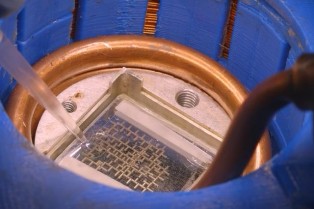


HARROW: A team of Stanford engineers led by assistant professor of bioengineering Manu Prakesh have created a miniature computer which operates using the physics of water droplets and magnetic fields.
The idea came to Prakash almost a decade ago, when he was a graduate student. Now, using his expertise in manipulating droplet fluid dynamics, he’s managed to create one of the fundamental components of a computer – an operating clock.
So why is a clock so important? And how can you use water droplets to make one? To answer the first question, consider this: in order to function properly, any computer program requires several operations running simultaneously and in a step-by-step manner. If the clock doesn’t work as it should, the operations can run out of sync, and your computing machine is pretty much useless.

Karachi Port sets 138-year cargo handling record
KARACHI: Pakistan's maritime sector has achieved a major milestone as Karachi Port set a new record in its 138-year history...