You might also like


LONDON: A high-speed, extragalactic jet of high velocity plasma has grown brighter over the last 20 years, and now scientists know why.
Using data collected by the Hubble Space Telescope, astronomers were able to show that over the last two decades one glowing knot of material in the jet slammed into another glowing knot just ahead of it. Now, the two knots are merging into one.
This bumping and merging of the two blobs of plasma is known as a shock-collision and gives energy to the particles involved.
“It basically makes them accelerate, and when they accelerate they tend to radiate at higher energies,” said Eileen Meyer of the Space Telescope Science Institute in Baltimore.
“We’d never seen a collision before, so to see them merge into one blob and get brighter is very exciting,” said Meyer, who led a study describing the findings published this week in Nature.
The jet Meyer and her colleagues observed is about 1,300-light-years long and very narrow. Meyer said it is less dense than our atmosphere or the sun, but adds, “You wouldn’t want to be in the path of this thing.”
It is traveling at 98% of the speed of light, and is kind of bumpy with a string-of-pearls shape.
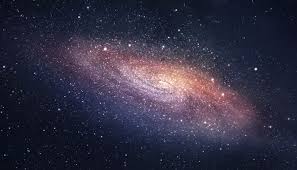
The particles in the jet were shot out of the accretion disk that formed around a super-massive black hole 100-million to 1-billion times the size of our sun. It lies in the center of the galaxy NGC 3862 about 260 million light years from Earth.