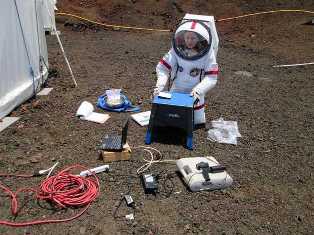


PERTH: The crew stepped outside the dome 8,000ft up the slopes of Mauna Loa, Hawaii, to feel fresh air on their skin. It was the first time they had left without a space suit.
The scientists are part of a human performance study funded by Nasa that tracked how they worked together as a team. They have been monitored by surveillance cameras, body movement trackers and electronic surveys.
Crew member Jocelyn Dunn said it was “awesome” to feel the sensation of wind on her skin.
“When we first walked out the door, it was scary not to have a suit on,” said Ms Dunn, 27, a doctoral candidate at Purdue University, Indiana. “We’ve been pretending for so long.”
The dome’s volcanic location, silence and its simulated airlock seal provided an atmosphere similar to space. Looking out of the dome’s porthole windows, all the scientists could see were lava fields and mountains, said University of Hawaii professor Kim Binsted, principal investigator for the study.
Tracking the crew members’ emotions and performance in the isolated environment could help ground crews during future missions to determine if a crew member is becoming depressed or if the team is having communication problems.
“Astronauts are very stoic people, very level-headed, and there’s a certain hesitancy to report problems,” Ms Binsted said. “So this is a way for people on the ground to detect cohesion-related problems before they become a real issue.”
Spending eight months in a confined space with six people had its challenges, but crew members relieved stress doing team workouts and yoga. They were able to use a solar-powered treadmill and stationary bike, but only in the afternoons on sunny days.

Karachi Port sets 138-year cargo handling record
KARACHI: Pakistan's maritime sector has achieved a major milestone as Karachi Port set a new record in its 138-year history...