

MALI: It’s tricky studying the history of a time when no one wrote things down. Archaeology pieces together how people lived in the past by studying artifacts they left behind; linguistics by analyzing newer languages to reconstruct the old.
This week, another branch of science — genetics — gave the exercise a try, as two separate teams of scientists published reports detailing how they used DNA to map out human migrations that took place thousands of years ago. Their discoveries helped shed light on decades-old questions about the origins of European languages.
At issue is anthropologists’ understanding of the huge cultural changes that swept through during the Bronze Age in Europe and Central Asia, around 3000 B.C. to 1,000 B.C. Some scholars have argued that the spread of new cultures at the time was the result of people staying in place and spreading their ideas. Others believe that populations relocated, migrating and carrying their way of life — and perhaps, the rudiments of the languages we speak today — with them.
In the two new studies, both published by the journal Nature, genetics researchers bolstered one side of the argument: that it was people, not ideas, who did the moving.
“Our findings show that these transformations involved migrations,” wrote University of Copenhagen evolutionary biologist Eske Willerslev and his coauthors, in one of the reports.
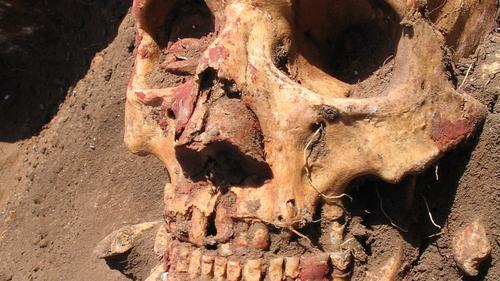
Combined, Willerslev’s study and a separate effort led by Harvard Medical School geneticist David Reich looked at DNA from the remains of 170 individuals who lived across Europe and Central Asia between about 6,000 B.C. to 900 B.C.
Because the DNA samples were very old, their quality was relatively poor. But they were good enough, wrote University of Chicago geneticist John Novembre in an editorial accompanying the studies, to “discern broad brushstrokes of human migration.”
Significantly, both teams noticed strong genetic similarities between members of the early Bronze Age Yamnaya culture, of the Russian steppes, and members of the later Corded Ware culture, of central Europe — suggesting that Yamnaya people had migrated north and west.

Karachi Port sets 138-year cargo handling record
KARACHI: Pakistan's maritime sector has achieved a major milestone as Karachi Port set a new record in its 138-year history...