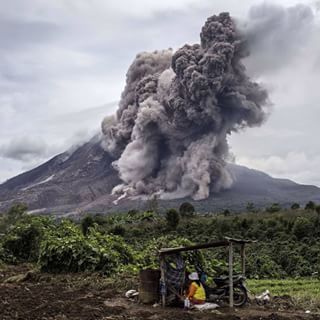
JAKARTA: Thousands have fled their homes as avalanches of hot ash continue to barrel down the slopes of the volcano on the Island of Sumatra.
The volcano was on the highest alert level for two weeks before erupting on Monday.


But several thousand residents, including women carrying babies, have moved into evacuation centers following volcanic activity that became more frightening on June 13. Some streamed down the scorched slopes on motorcycles, their faces caked in ash. This is a concern for many local villagers in the surrounding area, who depend on the land for their livelihood. “They are confident of being able to escape a major eruption”.
“In all matters relating to Mt. Sinabung, we have to respond swiftly”, he said after a limited Cabinet meeting at the Presidential Office on Thursday.
The 8,070-foot volcano has erupted off and on since 2010, when it roared to life to the surprise of scientists after four centuries of slumber.
“We have lost our vegetables, but not coffee”, said Sapta Sembiring Palawi, a farmer who refuses to leave Gambir village, three miles from the smouldering peak. About 2,000 people were unable to return to their homes because it was deemed uninhabitable. The expansive archipelago nation, which has more volcanoes than any other country, is prone to volcanic eruptions and seismic upheavals because it sits on the Pacific “Ring of Fire”.
President Joko “Jokowi” Widodo has asked relevant ministers to act swiftly to provide shelter or housing and jobs for people displaced by the eruption of Mount Sinabung in Karo regency, North Sumatra. According to worldwide Business Times, the eruption is the latest since the government put the volcano on its highest alert status.
More than 150,000 people live along the slopes of Mount Sinabung, taking advantage of its fertile soil to grow chilies, oranges, cocoa and coffee. They have moved into tent camps or government buildings a safe distance from the volcano. And since their villages remain unlivable, the evacuees are still living in temporary houses provided by the government while waiting for permanent relocation.