

Customs Today
  • Home
  • Islamabad
  • Karachi
  • Lahore
  • National
  • Transfers and Postings
  • Chambers & Associations
  • Business
No Result
View All Result
Customs Today
  • Home
  • Islamabad
  • Karachi
  • Lahore
  • National
  • Transfers and Postings
  • Chambers & Associations
  • Business
No Result
View All Result
Customs Today
No Result
View All Result
Home Science & Technology Science

16m years old large walking bat’s fossils discovered in New Zealand

byCustoms Today Report
23/06/2015
in Science, Science & Technology
Share on FacebookShare on Twitter

You might also like

Tesla driverless system to use updated radar technology

12/09/2016

Apple to develop its own self-driving technology

10/09/2016

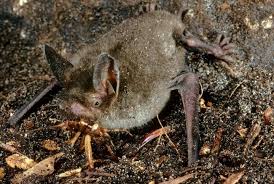
CLIVE: Fossilized remains of a bat species that walked on four limbs and was triple the size of today’s screeching mammals has been discovered in New Zealand.
The new species, Mystacina miocenalis, thrived 16 million years ago in what was a subtropical rain forest and was described in the journal PLOS ONE. It is related to another bat, Mystacina tuberculata, which still lives in New Zealand’s old growth forests.
“Our discovery shows for the first time that Mystacina bats have been present in New Zealand for upwards of 16 million years, residing in habitats with very similar plant life and food sources,” said Suzanne Hand, the lead author of the study, a vertebrate paleontologist at the University of New South Wales in Australia.
New Zealand’s only native terrestrial mammals are three species of bat, including two belonging to the Mystacina genus – one of which was last sighted in the 1960s. Unlike their flying cousins, they are known as burrowing bats because they forage on the ground under leaf-litter and snow, as well as in the air. They scuttle on their wrists and backward-facing feet, while keeping their wings tightly furled.
Scientists long believed the bats had an ancient history and reached as far as Australia. But until now, the oldest fossil of a Mystacina bat in New Zealand was from a cave in South Island, dating to 17,500 years ago.

Related Stories

Tesla driverless system to use updated radar technology

byCT Report
12/09/2016

WASHINGTON: Electric carmaker Tesla announced Sunday it was upgrading its Autopilot software to use more advanced radar technology. In a...

Apple to develop its own self-driving technology

byCT Report
10/09/2016

SAN FRANCISCO: Apple may not become an automaker, but it still wants to develop its own self-driving technology. The iPhone-maker's...

NASA spots slowest known magnetar

byCT Report
10/09/2016

WASHINGTON: Astronomers have found evidence of a magnetar - magnetised neutron star - that spins much slower than the slowest...

‘YouTubers’ outshining old-school television

byCT Report
09/08/2016

SAN FRANCISCO: A media revolution is taking place, and most people over 35 years of age aren’t tuned in. Millennial...

Next Post

Earth's sixth mass extinction is here; human could be the 1st victims, study

  • Terms and Conditions
  • Disclaimer

© 2011 Customs Today -World's first newspaper on customs. Customs Today.

No Result
View All Result
  • Transfers and Postings
  • Latest News
  • Karachi
  • Islamabad
  • Lahore
  • National
  • Chambers & Associations
  • Business
  • About Us

© 2011 Customs Today -World's first newspaper on customs. Customs Today.