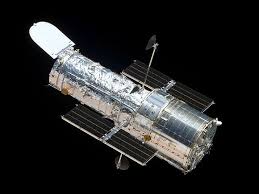


CANADA: The Hubble Space Telescope captures yet another intriguing image, a comet-like planet called GJ 436b. This distant planet has a gas trail which has been attributed to the excess of hydrogen gas that is surrounding this exoplanet.
This Neptune-size planet with a massive stream of gas flowing behind it like a comet’s tail is claimed to be the first of its kind ever discovered by astronomers.
The GJ 436b has been tracked using the NASA’s Hubble Space Telescope and Chandra X-ray Observatory and is located about 33 light-years from Earth in the constellation Leo.
The strange planet has been spotted orbiting a red dwarf star, and its close proximity to this red star has lead to the active evaporation of its atmosphere due to stellar radiation. Thus, though this planet is about 22 times as massive as Earth, it is relatively small for its massive atmosphere, which has been dubbed by the astronomers ‘The Behemoth’.
David Ehrenreich, an astronomer at the observatory of the University of Geneva in Switzerland and the lead author of the study, stated,” This cloud is very spectacular, though the evaporation rate does not threaten the planet right now”.
Ehrenreich further explains that the red star would have been more active in the past leading to a faster evaporation of the planet during its first billion years of existence because of the strong radiation from the young star.
The researchers believe that the discovery of the comet-planet would help to trace early evolution of ‘Hot Super-Earths’ and it may also reveal details about Earth’s past lives as it is speculated by scientists that Earth once hosted a large hydrogen-rich atmosphere.

Karachi Port sets 138-year cargo handling record
KARACHI: Pakistan's maritime sector has achieved a major milestone as Karachi Port set a new record in its 138-year history...