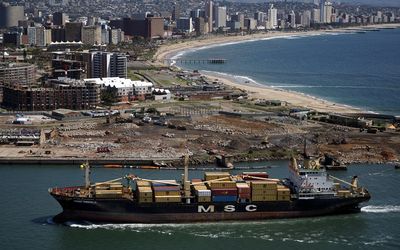
PORTS: Investment meant to address SA’s infrastructure backlog is not matching up to the levels envisaged by the National Development Plan. The country’s ports are among critical facilities caught up in entrenched regulatory frameworks that appear unable to reform monopolistic pricing behaviour.
This is particularly evident in the regulation of state-owned entities such as Eskom and Transnet — which account for much of the planned infrastructure spend — where pricing is often far removed from costs.
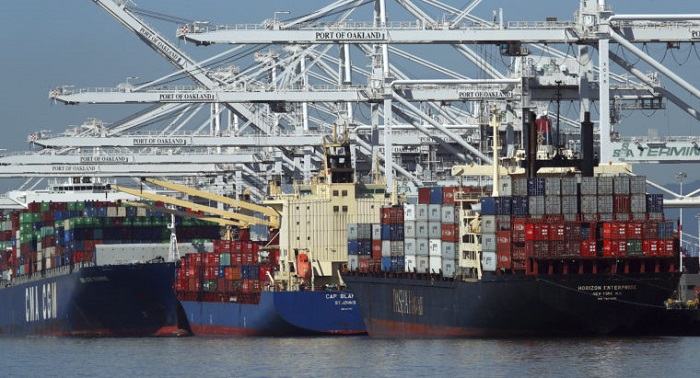

SA’s ports, through which more than 98% of the country’s imports and exports pass, best illustrate this. The country’s port network is expensive and largely inefficient.
While the latest Port Regulator’s Global Pricing Comparator Study shows improvements to the overall container shipping costs of SA’s ports in the past three years, the higher-than-average costs persist.
Transnet is undertaking a R312bn capital investment programme in recognition of its limitations and their effect on the economy. Of this, R33bn will be invested in Transnet Port Terminals and R47bn in the Transnet National Port Authority.
But the size of the investment programme is linked to economic growth rates being stable at 2.5%-3%. Thus, slowing economic growth is a threat to its plans.
For container traffic, SA’s ports are particularly pricey. The handling of containers through Durban and Cape Town ports is still 125% more expensive on a total ports costs definition than the global average, making these two the most expensive in the world.
With the bulk of SA’s manufactured goods exported through containers, these high costs are “clearly contradictory to industrial policy, which aims to incentivise value addition, broadening of the manufacturing base and increasing manufactured exports”, the benchmark study says.
The World Bank’s 2015 Doing Business in SA says the country’s exports “have suffered” since the 2008 global debt crisis.
“And while that is closely linked to external factors, the burdens faced by South Africans when exporting goods through the country’s major ports cannot be ignored — SA is among the 50 most expensive economies to export, as expensive as a landlocked economy such as Paraguay,” the report says.
SA ranks 100 out of 189 economies measured by Doing Business 2015 on the ease of trading across borders. It is among the top five performers in sub-Saharan Africa.
“The number of documents necessary to import and export in SA is high compared globally,” the World Bank says.
Exporting through the four ports (Cape Town, Durban, Ngqura and Port Elizabeth) measured in this study requires five documents, takes on average 16 days and costs an average of $1,968 per 20-foot container.
In France and Ireland only one document is needed, while Panama requires three documents.
Importing requires six documents, takes on average 20 days and costs $2,190 per 20-foot container.
Singapore, the best-performing port, takes four days for imports while for exports it needs six days.
Developing economy peers Brazil and Mexico require 12 and 11.2 days to import, respectively, while needing six and eight days to export. Port and terminal handling times differ across ports, especially for imports, ranging from six to nine days.
Durban is the slowest port, partly because it handles larger volumes of containers and experiences congestion. Inland transportation represents the highest cost, reflecting the distance between the ports and Johannesburg.
Some of the recommendations to improve logistics in SA include streamlining the documentation requirements; identifying constraints to port efficiency; and cutting port tariffs.
Creating a simple trade documentation system with the help of the South African Revenue Service, Transnet and private operators is also necessary, the World Bank says.