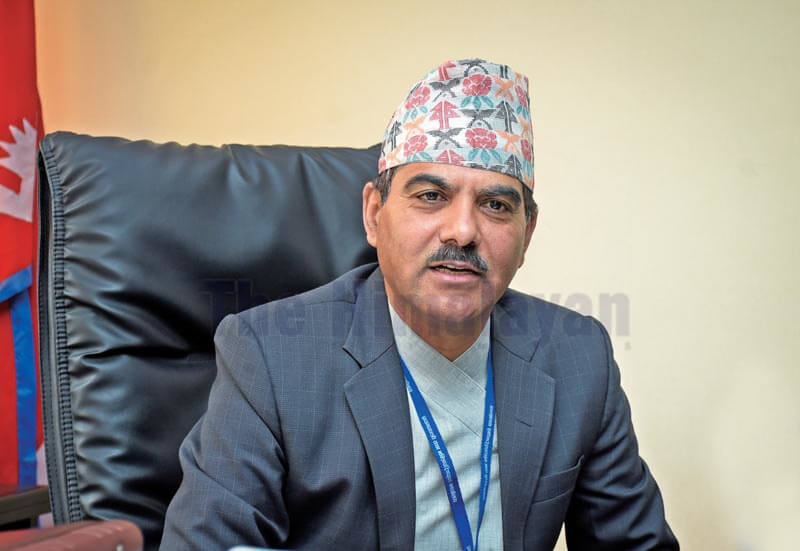
KATHMANDU: Taxation and customs clearance are major bureaucratic issues that continue to challenge and impede humanitarian operations in Nepal, head of United Nations humanitarian operations has said.
Briefing the media at the United Nations’ headquarters in New York on Wednesday, John Ging, director of operations for the UN Office for the Coordination of Humanitarian Affairs, said that there is a “need to adopt the best international practice when it comes to these issues of fast-tracking the clearance of humanitarian supplies through customs and also waiving the whole taxation.”
You might also like
Ging was in Nepal for three days reviewing the state of humanitarian situation and response. “We cannot afford to have 30 percent of the funding going into taxation. This is life-saving support that needs to get to the people,” he said, adding that only 46 percent of UN ’s international appeal of $422 million in humanitarian aid to cover the period until the end of September has been funded. “I saw corrugated iron sheets held up in customs warehouses in Kathmandu when in fact people are exposed to these monsoon rains.”
The government had allowed tax waiver on relief materials following the quake but the Cabinet decided to levy tax from June 22. According to Bhupal Baral, chief customs administrator at Tribhuvan Airport Customs Office, imported materials are subjected to excise duty, customs duty and value-added tax before getting clearance from the office. “After the Cabinet’s decision, we have started charging due tax on goods regardless of their nature (relief or not),” he added.
During the press conference, Ging lauded the speed with which recovery and reconstruction endeavour is being prioritised in Nepal but cautioned against possible inefficiency during the haste. “We encourage and hope there will be a build-back-better approach but we cannot be naive. Most of the housing collapsed with poor compliance of building codes,” he said. “So in the urgency to rebuild in the impoverishment that there is, we have to be alert to the real danger of there being a build back worse,” he added.
When asked for clarification on the reports of substandard food being distributed to victims by World Food Programme, Ging said that the same source of that story continued to be recycled and it was distracting. “The evidence was presented clearly that there was no distribution of substandard food,” he said.