
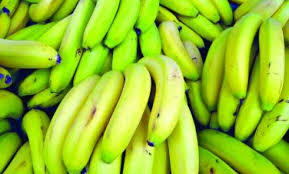
TOKYO: The Pilipino Banana Growers and Exporters Association (PBGEA) is urging the government to review the concessions in the Philippine-Japan Economic Partnership Agreement (PJEPA) to secure the country’s position in the Japanese market and ensure that the Philippine banana industry continues to be the second top exporter of world-class bananas.
The appeal came as more and more Japanese importers began striking deals with suppliers in Mozambique, Vietnam, Costa Rica, and lately in Indonesia, consequently reducing Japan’s dependence on the Philippines.


Under bilateral and economic partnership agreements, fresh bananas exported from those countries enjoy zero tariffs for their pooled quotas of 1,000 tons per year, as opposed to the tariffs for Philippine banana that ranges from 8.5 percent to as high as 18.5 percent. No quota is imposed on the country as well.
In a letter sent to the offices of the Department of Trade and Industry (DTI) Secretary Gregory Domingo and Department of Agriculture (DA) Secretary Proceso Alcala, PBGEA executive director Stephen Antig pointed out that “it is only logical for Japanese importers to source part of their supplies from countries with zero tariffs to minimize business costs hence, reducing their demand for Philippine bananas.”
ln 2014, records from the Ministry of Finance of Japan showed 12 countries were Japan’s sources of fresh bananas, namely: the Philippines, Ecuador, Guatemala, Peru, Taiwan, Mexico, Colombia, Thailand, costa Rica, China, Mozambique and the Dominican Republic.
It was also noted that imports from Ecuador and Guatemala, two of the top exporters of fresh bananas in the world, increased sharply
Based on the same official report, the volume of Philippine bananas imported by Japan in 2014 is the lowest since 2005 despite excellent production volume in the Philippines.
“The gradual decrease in volume is some sort of an embarrassment to the quality of Philippine exports. We are, therefore, reiterating our request for a re-negotiation to possibly reduce, if not eliminate, the tariffs on Philippine bananas, a move that is clearly supported by Japanese fruit importers, particularly the Japan Fresh Produce Import and Safety Association (PlSA) since four years ago,” Antig said.
PBGEA also took the opportunity to reiterate the industry’s other concerns that need the immediate attention and support of the DA to ensure the sustainability of the Philippine export banana industry.
These include their opposition to H.B. 5161, filed by Representative Teddy Brawner Baguilat, Jr. who wants to regulate agribusiness venture agreements (AVAs) in agrarian reform areas; the legislative policy regulating the conduct of aerial spraying in all agricultural plantations; and the local legislations banning/prohibiting the expansion of banana and pineapple plantations in certain areas in Bukidnon and South Cotabato.
Manila is now reviewing all possible agricultural products viable for export to Tokyo as part of renegotiations of commitments under the PJEPA.
In an earlier interview, DA Undersecretary Segfredo Serrano said they are continuing negotiations with their Japanese counterparts to increase the number of tariff lines—mainly agricultural and marine products in which the Philippines has competitive advantage.
“We told them that we want more than 3,000 tariff lines, we want the negotiations to focus on agricultural products and fisheries. This should go side-by-side,” Serrano said.
“We want them [Japan] to bring down to zero all their agricultural tariffs to reciprocate our own reduction of tariff,” Serrano said, stressing that the Philippines has been ahead in reducing its tariff wall compared to Japan.
The PJEPA—formerly known as the Japan-Philippines Economic Partnership Agreement or JPEPA—is a bilateral agreement intended to liberalize trade, investments and labor relations between the two countries.
Serrano said that they are seeking a review of the PJEPA because of Japan’s failure to fulfill its own commitments under the agreement.
Besides the increase in the number of tariff lines, Manila is also seeking country-specific-quotas (CSQ) on various agricultural products that will qualify for preferential rates.



