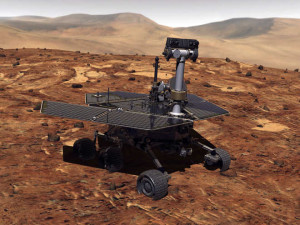


NEW YORK: The Curiosity rover has been on the Gale crater of Mars since its successful landing on August 6th, 2012. Now, scientists have discovered that the Red planet is more similar to Earth than originally thought.
Using rock data gathered by the robot, a study published in Nature Geoscience, found that many of the rocks in the crater had similar chemical makeup to ones found in the Earth’s crust.
The discovery will help with our understanding of not only the history of Mars as a planet, but also the makeup of parts of the planet unexplored by terrestrial rovers such as Curiosity.
The crust of a planet is the outermost and thinnest layer. On Earth, the rock on land, or the continental crust, is typically lighter than what you’d find deeper in the oceans, or the oceanic crust.
Nature Geoscience’s study revealed evidence of this continental crust has been found on Mars.

Karachi Port sets 138-year cargo handling record
KARACHI: Pakistan's maritime sector has achieved a major milestone as Karachi Port set a new record in its 138-year history...