

Customs Today
  • Home
  • Islamabad
  • Karachi
  • Lahore
  • National
  • Transfers and Postings
  • Chambers & Associations
  • Business
No Result
View All Result
Customs Today
  • Home
  • Islamabad
  • Karachi
  • Lahore
  • National
  • Transfers and Postings
  • Chambers & Associations
  • Business
No Result
View All Result
Customs Today
No Result
View All Result
Home Science & Technology Science

Windbots could explore the atmosphere of Jupiter, NASA

byCustoms Today Report
25/07/2015
in Science, Science & Technology
Share on FacebookShare on Twitter

You might also like

Tesla driverless system to use updated radar technology

12/09/2016

Apple to develop its own self-driving technology

10/09/2016

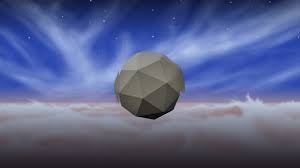
PARIS: Windbots could explore the atmosphere of Jupiter one day, according to NASA researchers exploring the unique craft.
These unusual vehicles would move through the dense, turbulent gases that surround the giant world. Instead of flying, the vehicles would “bob” through the atmosphere.
Nasa’s Innovative Advanced Concepts (NIAC) program has awarded $100,000 toward research into these potentially revolutionary designs for robotic explorers to distant worlds.
Four of the planets within our solar system—Jupiter, Saturn, Uranus and Neptune—have never been explored by rovers. This is due to the fact that each of these giant worlds is composed of a vast, dense atmosphere that makes up the majority of their sizable radius. At the present time, it would be impossible to land a spacecraft on the solid core of a giant planet hidden deep beneath the visible surface of the atmosphere.
“One could imagine a network of windbots existing for quite a long time on Jupiter or Saturn, sending information about ever-changing weather patterns. And, of course, what we learn about the atmospheres of other planets enriches our understanding of Earth’s own weather and climate,” Adrian Stoica, principal investigator for windbots research at Jet Propulsion Laboratory, said.
The Galileo spacecraft sent a probe into the atmosphere of Jupiter in 1995. That vehicle, which deployed a parachute during its descent, only lasted around an hour before succumbing to the enormous temperatures and pressures.

Related Stories

Tesla driverless system to use updated radar technology

byCT Report
12/09/2016

WASHINGTON: Electric carmaker Tesla announced Sunday it was upgrading its Autopilot software to use more advanced radar technology. In a...

Apple to develop its own self-driving technology

byCT Report
10/09/2016

SAN FRANCISCO: Apple may not become an automaker, but it still wants to develop its own self-driving technology. The iPhone-maker's...

NASA spots slowest known magnetar

byCT Report
10/09/2016

WASHINGTON: Astronomers have found evidence of a magnetar - magnetised neutron star - that spins much slower than the slowest...

‘YouTubers’ outshining old-school television

byCT Report
09/08/2016

SAN FRANCISCO: A media revolution is taking place, and most people over 35 years of age aren’t tuned in. Millennial...

Next Post

Silicon-based light detectors can speed up computers

  • Terms and Conditions
  • Disclaimer

© 2011 Customs Today -World's first newspaper on customs. Customs Today.

No Result
View All Result
  • Transfers and Postings
  • Latest News
  • Karachi
  • Islamabad
  • Lahore
  • National
  • Chambers & Associations
  • Business
  • About Us

© 2011 Customs Today -World's first newspaper on customs. Customs Today.