Customs Today
  • Home
  • Islamabad
  • Karachi
  • Lahore
  • National
  • Transfers and Postings
  • Chambers & Associations
  • Business
No Result
View All Result
Customs Today
  • Home
  • Islamabad
  • Karachi
  • Lahore
  • National
  • Transfers and Postings
  • Chambers & Associations
  • Business
No Result
View All Result
Customs Today
No Result
View All Result
Home Science & Technology Science

Radiocarbon dating face big threats from fossil fuel

byCustoms Today Report
27/07/2015
in Science, Science & Technology
Share on FacebookShare on Twitter

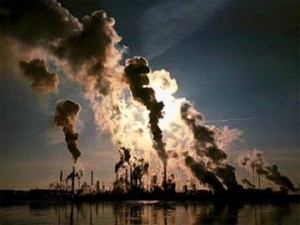
LONDON: Radiocarbon dating which is used to estimate the age of every particular thing on earth is facing big threat from the fossil fuel and carbon in the atmosphere. Researchers said excess of carbon in atmosphere due to burning of fossil fuel could reduce the accuracy of Radiocarbon dating.

Heather Graven, a climate-physics researcher at Imperial College London, after an analysis has found that emissions from fossil fuels are artificially raising the carbon age of the atmosphere.


You might also like

Tesla driverless system to use updated radar technology

12/09/2016

Apple to develop its own self-driving technology

10/09/2016

Large amount of carbon in atmosphere is making objects today seem much older than they are when scrutinized by a radiocarbon dater, he said.

Dr. Graven said, “Combustion of fossil fuels is diluting the fraction of atmospheric carbon dioxide containing radiocarbon. This is making the atmosphere appear as though it has aged or lost radiocarbon by radioactive decay occurring over time”.

Radiocarbon dating works by measuring the amount of carbon-14 decay, or how much the fraction of carbon-14 versus non-radioactive carbon has changed in an object. The older an object is the lesser is the C-14 found in it.

Fossil fuels like coal and oil are so old that they contain no carbon-14 and when their emissions mix with the modern atmosphere, they flood it with non-radioactive carbon, said experts.

According to the press release of the study, the fraction of carbon-14 in the atmosphere decreased after the Industrial Revolution with the rise of fossil fuel combustion. But later in 1950s and 60s, nuclear weapons testing led to remarkable increase of carbon.

Graven said that at current rates of fossil fuel emissions, increases in non-radioactive carbon could start impacting the carbon dating by 2020.


 

Related Stories

Tesla driverless system to use updated radar technology

byCT Report
12/09/2016

WASHINGTON: Electric carmaker Tesla announced Sunday it was upgrading its Autopilot software to use more advanced radar technology. In a...

Apple to develop its own self-driving technology

byCT Report
10/09/2016

SAN FRANCISCO: Apple may not become an automaker, but it still wants to develop its own self-driving technology. The iPhone-maker's...

NASA spots slowest known magnetar

byCT Report
10/09/2016

WASHINGTON: Astronomers have found evidence of a magnetar - magnetised neutron star - that spins much slower than the slowest...

‘YouTubers’ outshining old-school television

byCT Report
09/08/2016

SAN FRANCISCO: A media revolution is taking place, and most people over 35 years of age aren’t tuned in. Millennial...

Next Post

Mammoths killed by rapid climate change, scientist says

  • Terms and Conditions
  • Disclaimer

© 2011 Customs Today -World's first newspaper on customs. Customs Today.

No Result
View All Result
  • Transfers and Postings
  • Latest News
  • Karachi
  • Islamabad
  • Lahore
  • National
  • Chambers & Associations
  • Business
  • About Us

© 2011 Customs Today -World's first newspaper on customs. Customs Today.