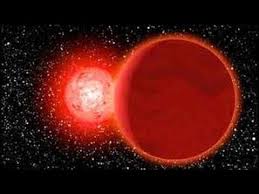
LONDON: Astronomers have discovered the first aurora ever seen in an object beyond our Solar System. The aurora — similar to the famous “Northern Lights” on Earth — is 10,000 times more powerful than any previously seen. They found the aurora not from a planet, but from a low-mass star at the boundary between stars and brown dwarfs.
The discovery reveals a major difference between the magnetic activity of more-massive stars and that of brown dwarfs and planets, the scientists said.


“All the magnetic activity we see on this object can be explained by powerful auroras,” said Gregg Hallinan, of the California Institute of Technology (Caltech). “This indicates that auroral activity replaces solar-like coronal activity on brown dwarfs and smaller objects,” he added.
The astronomers observed the object, called LSR J1835+3259, using the Karl G. Jansky Very Large Array (VLA) at radio wavelengths, along with the 5-meter Hale Telescope on Palomar Mountain and the 10-meter Keck Telescope in Hawaii at optical wavelengths. The combination of radio and optical observations showed that the object, 18 light-years from Earth, has characteristics unlike any seen in more-massive stars.