CANADA: New research suggests that Canada’s drought-stricken forests will take years longer to recover from dry weather than previously thought.
In a study published in Science magazine, William Anderegg of Princeton University said trees feel the lingering effects of a drought for up to four years.
You might also like


“Drought is always (thought of) as a light switch: when it’s dry, trees grow slowly, but the moment the rains come back and the soil gets wetter, it’s like the trees recover perfectly and almost immediately,” he said.
“It turns out it doesn’t work like that.”
The findings are expected to affect everyone from foresters estimating harvest rates to climate modellers trying to understand how forests affect greenhouse gas emissions, especially as Canada’s great northern greenbelt continues to warm.
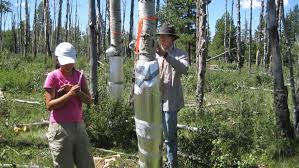
Anderegg’s findings are based on an analysis of tree rings from more than 1,300 trees around the world.
He and his colleagues compared growth rates in the years following droughts with the average growth rate for a tree in those locations.
The differences were substantial.
Researchers concluded that trees grew an average of nine per cent less the first year after a drought and about five per cent less the second year. For some types of trees, effects continued for another two years.
The researchers used 18 different methods of measuring drought and each gave a similar result.
“It seems like trees are pretty sensitive to drought and they just take a while to recover.”
The effects were most noticeable in pines and aspens — two of the most common species in the vast swath of boreal forest that stretches across Canada.