

TOKYO: Scientists have long been looking for about a billion ton of unaccounted carbon dioxide produced each year from the burning of fossil fossils.
About 11 billion tons of carbon are generated annually; over five billion of these remain in the atmosphere, another three billion is in the ocean and the rest seems to be sequestered in forests. About a billion tons of carbon though could not be accounted for.
Now, researchers appear to have found a possible repository for the missing carbon, and this is below the deserts of the world. A discovery made by Chinese scientists suggests that there could be a hidden ocean underneath China’s dry regions.
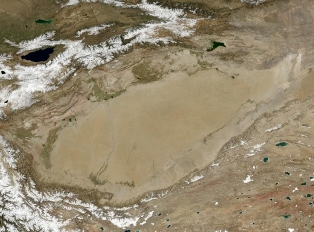
Although the Tarim basin in northwestern Xinjiang, China is among the planet’s driest places, it conceals beneath saltwater that could be about 10 times the amount of water present in all of North America’s five Great Lakes.
“Never before have people dared to imagine so much water under the sand. Our definition of desert may have to change,” said Li Yan from the Chinese Academy of Sciences.
About a decade ago, Yan and colleagues discovered massive amounts of carbon dioxide that disappear in the region but they could not find an explanation on where this could be going.
In their study published in the journal Geophysical Research Letters on July 28, the researchers state that there could be massive amounts of water beneath the largest deserts on Earth, serving as carbon sinks.

Karachi Port sets 138-year cargo handling record
KARACHI: Pakistan's maritime sector has achieved a major milestone as Karachi Port set a new record in its 138-year history...