Customs Today
  • Home
  • Islamabad
  • Karachi
  • Lahore
  • National
  • Transfers and Postings
  • Chambers & Associations
  • Business
No Result
View All Result
Customs Today
  • Home
  • Islamabad
  • Karachi
  • Lahore
  • National
  • Transfers and Postings
  • Chambers & Associations
  • Business
No Result
View All Result
Customs Today
No Result
View All Result
Home Science & Technology Science

Researchers prove, antibiotic pollution of waterways may create superbugs of tomorrow

byCustoms Today Report
07/08/2015
in Science, Science & Technology
Share on FacebookShare on Twitter

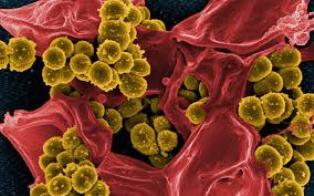
CANADA: A team from Macquarie University has proved for the first time that even low concentrations of antibiotics are polluting waterways, according to a study published today in Frontiers in Microbiology.

Using low, realistic concentrations of antibiotics that might be found in waste water, the team showed a series of worrying effects on both environmental and clinical bacteria, including rearrangements of the bacterial DNA, changes in the colonies that the bacteria form, and most importantly, the evolution of antibiotic-resistant strains.


You might also like

Tesla driverless system to use updated radar technology

12/09/2016

Apple to develop its own self-driving technology

10/09/2016

“Because humans release enormous quantities of antibiotics into the environment from homes, hospitals and farms, it is likely that many bacteria in our natural environment are becoming antibiotic resistant,” said Professor Michael Gillings, co-author of the paper. “These newly resistant strains may become the superbugs of tomorrow, meaning they are immune to all current antibiotics.”

Pollution comes from a variety of sources, including from antibiotics used during animal production, as well as from spreading manure on crop land or using sewage as fertiliser. Humans contribute too, as up to 80 percent of an antibiotic dose passes straight through the body and into waterways.

Both the World Health Organization and the Centers for Disease Control and Prevention in the United States have identified antibiotic resistance as a high priority for research. Resistance can be prevented by using antibiotics wisely, by not dumping unused antibiotics in drains or toilets, and by improving waste water treatment.


Related Stories

Tesla driverless system to use updated radar technology

byCT Report
12/09/2016

WASHINGTON: Electric carmaker Tesla announced Sunday it was upgrading its Autopilot software to use more advanced radar technology. In a...

Apple to develop its own self-driving technology

byCT Report
10/09/2016

SAN FRANCISCO: Apple may not become an automaker, but it still wants to develop its own self-driving technology. The iPhone-maker's...

NASA spots slowest known magnetar

byCT Report
10/09/2016

WASHINGTON: Astronomers have found evidence of a magnetar - magnetised neutron star - that spins much slower than the slowest...

‘YouTubers’ outshining old-school television

byCT Report
09/08/2016

SAN FRANCISCO: A media revolution is taking place, and most people over 35 years of age aren’t tuned in. Millennial...

Next Post

Australia to impose 10% duty on wheat import 

  • Terms and Conditions
  • Disclaimer

© 2011 Customs Today -World's first newspaper on customs. Customs Today.

No Result
View All Result
  • Transfers and Postings
  • Latest News
  • Karachi
  • Islamabad
  • Lahore
  • National
  • Chambers & Associations
  • Business
  • About Us

© 2011 Customs Today -World's first newspaper on customs. Customs Today.