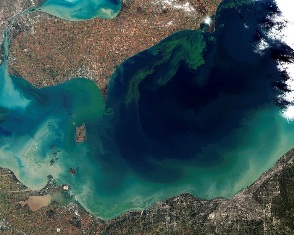


FRANCE: The National Aeronautics and Space Administration (NASA) has released the latest photographs of the algal blooms forming in the waters of the Great Lakes located on the border of the United States and Canada.
The new images were captured on July 28, using the Operational Land Imager (OLI) on board the American space agency’s Landsat 8 satellite. The algal blooms appear as green swirls in the waters of Lake St. Clair and the western portion of Lake Erie.
Scientists at the National Oceanic and Atmospheric Administration (NOAA) predicted last month that this year’s season for algal blooms would be most devastating in areas covered by Lake Erie. Their forecast suggests that the growth of algae in the lake’s western portion could equal the severity of the algal blooms observed in 2011.
The algae that typically form in the basin are most active when sunlight and nutrients from agricultural runoff are abundant and also when the temperature of the water becomes warmer. The bloom season lasts from summer until September.
In 2011, studies confirmed that phosphorus from the runoff of farms in the area combined with conditions in the lake and favorable weather to produce the algal bloom that was three times more massive than what was initially observed.

Karachi Port sets 138-year cargo handling record
KARACHI: Pakistan's maritime sector has achieved a major milestone as Karachi Port set a new record in its 138-year history...