Customs Today
  • Home
  • Islamabad
  • Karachi
  • Lahore
  • National
  • Transfers and Postings
  • Chambers & Associations
  • Business
No Result
View All Result
Customs Today
  • Home
  • Islamabad
  • Karachi
  • Lahore
  • National
  • Transfers and Postings
  • Chambers & Associations
  • Business
No Result
View All Result
Customs Today
No Result
View All Result
Home Science & Technology Science

Euphrosynes study helps to learn more about NEO’s potenial threat to earth

byCustoms Today Report
10/08/2015
in Science, Science & Technology
Share on FacebookShare on Twitter

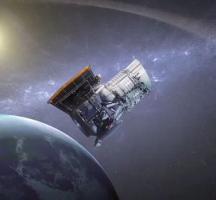
LONDON: Researchers in a new study used NASA’s NEOWISE telescope to look at the Euphrosynes to learn more about Near-Earth Objects (NEOs) and their potential threat to earth.

As per study researchers, 31 Euphrosyne is about 156 miles (260 km) across and is one of the ten largest asteroids in the belt. This asteroid is thought to be a remnant of a massive collision about 700 million years ago.


You might also like

Tesla driverless system to use updated radar technology

12/09/2016

Apple to develop its own self-driving technology

10/09/2016

It is located in the pouter main asteroid belt a very high inclination, said researchers. The Euphrosyne asteroid family occupies a unique place in orbital element space among families.

Researchers for the study studied 1,400 Euphrosyne asteroids, which turned out to be large and dark highly inclined and elliptical orbits. These traits make them good candidates for the source of some of the dark NEOs the NEOWISE telescope detects and discovers.

As per study authors, this particular asteroid family can be the source of some of the dark NEOs found to be on long, highly inclined orbits.

Researchers during the study found that through gravitational interactions with Saturn, the Euphrosyne asteroids can evolve into NEOs over timescales of millions of years.

Study lead author Dr. Joseph Masiero of NASA’s Jet Propulsion Laboratory in Pasadena said, “The Euphrosynes have gentle resonance with the orbit of Saturn that slowly moves these objects, eventually turning some of them into NEOs. This particular gravitational resonance tends to push some of larger fragments of the Euphrosyne family into near-Earth space”.

It has been said that after studying the Euphrosynes with NEOWISE, Dr Masiero and co-authors have been able to measure their sizes and the amount of solar energy they reflect.


 

Related Stories

Tesla driverless system to use updated radar technology

byCT Report
12/09/2016

WASHINGTON: Electric carmaker Tesla announced Sunday it was upgrading its Autopilot software to use more advanced radar technology. In a...

Apple to develop its own self-driving technology

byCT Report
10/09/2016

SAN FRANCISCO: Apple may not become an automaker, but it still wants to develop its own self-driving technology. The iPhone-maker's...

NASA spots slowest known magnetar

byCT Report
10/09/2016

WASHINGTON: Astronomers have found evidence of a magnetar - magnetised neutron star - that spins much slower than the slowest...

‘YouTubers’ outshining old-school television

byCT Report
09/08/2016

SAN FRANCISCO: A media revolution is taking place, and most people over 35 years of age aren’t tuned in. Millennial...

Next Post

Astronauts are ready to eat fresh food grown in space for 1st time

  • Terms and Conditions
  • Disclaimer

© 2011 Customs Today -World's first newspaper on customs. Customs Today.

No Result
View All Result
  • Transfers and Postings
  • Latest News
  • Karachi
  • Islamabad
  • Lahore
  • National
  • Chambers & Associations
  • Business
  • About Us

© 2011 Customs Today -World's first newspaper on customs. Customs Today.