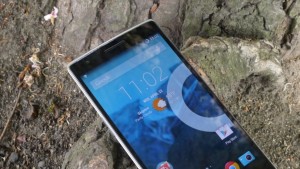
NEW DELHI: OnePlus has been one Chinese company, apart from Xiaomi, that has tasted early success for a startup since its launch of the OnePlus One early last year. It managed to sell over 1.5 million handsets globally. So naturally, the OnePlus 2 launch has been eagerly looked forward to by a lot many people. OnePlus as a company has certainly created a space in the mindset of phone buyers, so when Carl Pei launched the OnePlus 2, what the company calls the ‘2016 Flagship Killer’, at Rs 24,999 there has been a lot of buzz around the phone, so much so that there have already been over 2 million registrations for the phone, which goes on sale tomorrow. Also there have been reports of hacking the OnePlus invite system. We have been using the phone for close to two weeks now and here’s the complete review.
Build and Design: 8/10


The OnePlus 2 has improved on the design aspect of the phone over its predecessor. It employs a magnesium-aluminium alloy which makes up the metallic frame of the OnePlus 2.
The rear side, with its coarse Sandstone black finish, makes you feel at home if you’ve used the OnePlus One. The sandstone black cover is now easily removable, but it comes across as a bit too thin and easily flexes. Along with the sandstone back, you also get the option of a wooden back which will have to be bought separately. The phone has a slightly curved design on the back which helps with the grip. As compared to the OnePlus One, the OnePlus 2 is slightly heavier.
On the right hand side towards the top portion, you have the power/standby and volume rocker buttons. The top edge has the 3.5mm audio jack and at the base you have the USB Type-C port in the centre surrounded by two speaker grilles – which is new.
On the left hand side you have notifications notch called the Alert slider, which has a nice feedback to it. It lets you control notifications by sliding it from bottom to top (bottom – All notifications; middle – Priority interruptions and top – No interruptions), and as we experienced over the last couple of weeks, it will take some time getting used to that button.
The OnePlus 2 comes with a 5.5-inch display with a slightly larger screed-to-body ratio as compared to the OnePlus One. At the base of it you have a fingerprint scanner. It is not a button per se but a touchpad and it has a clear rounded rectangular marking. This is surrounded by two soft keys which light up when the phone is on. The metallic edge has chamfered edges which gives it a classy look. On the rear side, the camera is placed bang in middle with a dual LED flash unit on top and the laser autofocus system below the 13MP rear camera.
Features: 8/10
The OnePlus 2 comes with impressive internal specifications. It is powered by Qualcomm’s flagship Snapdragon 810 SoC which has a quad-core Cortex A57 and a quad-core Cortex A53 and has the Adreno 430 GPU. This is paired with 4GB of RAM for the 64GB storage variant. The 16GB storage variant of OnePlus 2 will come with 3GB of RAM. Like before, there is no microSD card slot to expand storage. The phone comes with Android 5.1 OS with OnePlus’s OxygenOS skin on it, but more on that later.
On the connectivity front, you get a dual-nano SIM card slot which is 4G compatible as well, Wi-Fi 802.11ac, Bluetooth 4.1, GPS, GLONASS, Digital Compass. One omission on the connectivity front is NFC, which could have been easily paired with the fingerprint sensor to verify NFC payments. Although this is a niche market segment in India and not really relevant, globally that is not the case. If Android Pay does get mainstream in India in the near future, then this feature may be missed. Although at the moment, its omission shouldn’t be that much of a bother. Also with the USB Type C connection, the OnePlus 2 will be the first phone to be selling with that connector in India.
Software: 7.5/10
The OnePlus 2 comes with the Android 5.1 OS with OnePlus’ own Oxygen OS 2.0 on it. Unlike some of the other skins we have seen in the past, the OxygenOS stays quite close to the design philosophy of the stock Android OS. Right from the arrangement of app icons, to notification settings, to the settings menu, a stock Android user will instantly feel at home. It does have a slight bit of some new design touches. For instance, swiping to left most home screen takes you to a feature called Shelf.
The looks inspired by HTCs Blinkfeed or the LG UIs side screen. At the moment though, it just has a list of your frequently used apps and your most frequent contacts with whom you have recently communicated. Not really much in terms of value addition, but who knows OnePlus may add in more social elements to it in the near future.
You can use gestures to launch the camera (make an O on the lock screen), turn on the torch light (make a V on the lock screen) and so on. Also the soft buttons can be interchanged; you can select quick actions on long pressing of the soft buttons. This makes some tasks quicker.
The finger print scanner which also acts as the home screen button, is fixed. Feeding in your fingerprint takes half a minute as the scanner is scanning your finger multiple times, but once set the scanner works accurately. The scanner is quick when it comes to unlocking the phone and works fine on most instances. However, on a couple of occasions it just got stuck and the sensor couldn’t recognise the finger print, hopefully a bug that can be fixed by future updates. The phone also offers you the option of ‘tap to wake up’ the device.
Display: 8/10
Performance: 8/10
OnePlus has gone ahead with a Qualcomm Snapdragon 810 SoC for the OnePlus 2 and it says that it has worked closely with Qualcomm to get rid of the heating issues that has been a cause for concern. So naturally, the first question that comes to mind is how the OnePlus 2 handles the heating issues. Well, if you play heavy games, shoot over 10-15 images with the camera, watch a movie and you will immediately start feeling the heat, starting from the metallic edges and later on the front and the rear side of the phone. But it does not get ridiculously hot as the Sony Xperia Z3+ did. Outdoors in sunny conditions, the phone gets warm noticeably faster as compared in indoors.