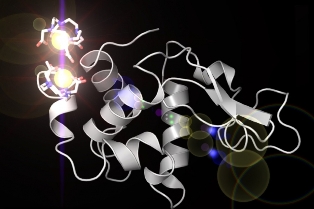


LONDON: Scientists at the SLAC National Accelerator Laboratory have uncovered details about the structure of a two-part protein that may fuel the development of new drugs for mental disorders such as depression, schizophrenia and anxiety.
According to an article on the SLAC website, neurons, or nerve cells, communicate with one another by releasing small receptacles of neurotransmitters, or signaling chemicals. With the help of binding proteins, these neurotransmitters are then absorbed by other neurons. Such inter-neuron communication allows an individual’s nervous system to react and respond to its surroundings.
The two proteins involved in the transfer of neurotransmitters are called SNARE and synaptotagmin 1, and together they form a protein complex. A small-scale rise in calcium concentration signals the complex to start the transfer between two neurons. Once signaled, SNARE and synaptotagmin fuse the neurons’ membranes together, allowing for a “gun-shot” release of neurotransmitters from one neuron to another.
Previous studies across several decades have analyzed SNARE and synaptotagmin 1 individually, but scientists were not aware of the proteins’ interactions until this most recent study, which involved growing and analyzing crystals of the protein complex.

Karachi Port sets 138-year cargo handling record
KARACHI: Pakistan's maritime sector has achieved a major milestone as Karachi Port set a new record in its 138-year history...