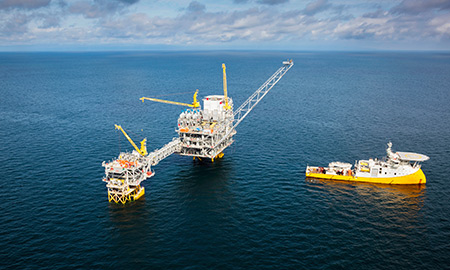
GEORGETOWN: On May 20, the ExxonMobil subsidiary Esso Exploration and Production Guyana Limited announced the discovery of approximately one billion barrels of oil equivalent in an area called the Stabroek Block, 120 miles off the Guyanese coast. Nicolas Maduro, the troubled Venezuelan dictator, immediately ordered ExxonMobil to stop exploring the block because he considers it Venezuelan territory. The move shocked Guyana’s newly elected President David Granger because Venezuela already has the world’s largest proven reserves. Clearly, Venezuela doesn’t need more oil.
But oil is not Maduro’s primary motive for dredging up the conflict. His motivations are deeper and more political. The dispute reaches back to 1899, when the Paris Arbitration Award granted Great Britain the contested territory west of the Essequibo River. Venezuela contested the ruling, eventually declaring it “null and void” at the United Nations in 1962, just four years before Guyana declared independence from Great Britain. Since then, Venezuela has refused to recognize the territory west of the Essequibo River as anything but Venezuelan sovereign territory. The issue is a raw nerve in the Venezuelan body politic, and Maduro is plucking this nerve to rally support for his party ahead of legislative elections in December.

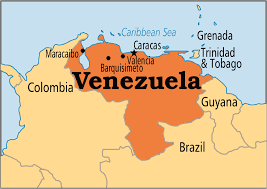
By issuing an official decree warning ExxonMobil to vacate the Stabroek block, Maduro is also taking a swipe at his newly elected neighbor, President Granger of the People’s National Congress Party. Maduro is upset that Granger’s coalition narrowly defeated the socialist People’s Progressive Party (PPP) in general elections this May, because the PPP ruled Guyana for the past twenty years, forging strong ties with his mentor, Venezuelan President Hugo Chavez.
In fact, Guyana joined Petrocaribe during the PPP’s tenure and the small, relatively weak Guyanese government soon became dependent on Venezuelan oil shipments. In exchange for shipments equal to roughly half of Guyana’s daily oil consumption, Guyana sends 200,000 tons of rice every year, about 40 percent of its total rice production. But, according to Guyanese Finance Minister Winston Jordan, the Venezuelan government threatened to stop buying rice from Granger’s government by 2016. Maduro is punishing Granger for his defiance and, as a result, Guyana might have to buy oil from Venezuela at market prices using hard currency.
Maduro’s hostility is also borne of fear. In May, Guyana sent a ship from the Guyanese Defense Force to St. Kitts and Nevis to partake in military exercises hosted by the U.S. Southern Command. And with U.S. investors fleeing Venezuelan markets, Maduro wants to prevent capital flight to an English-speaking, U.S.-aligned neighbor with sudden windfall oil profits.
Maduro knows that if Guyana keeps its government from forming an oil monopoly like the ones in Saudi Arabia and Venezuela, Guyana could become a wealthy and functional society. And if the government does eventually form an oil monopoly, Guyana could become the Kuwait to Venezuela’s Iraq; Maduro would want to prevent that.
As long as Venezuela doesn’t seize Guyanese oil assets or sabotage rigs, the Stabroek block could produce more than $40 billion worth of crude oil over ten years. In that case, Guyana, the third-least prosperous country in Latin America, with the world’s highest suicide rate, has a shot at becoming more like its most realistic role model, Uruguay. Since 1992 his secrets were locked away in his brain… but just recently he agreed to a private interview. It was all caught on camera… and what he has to say will change everything you think you know about trading. But you need to see it now… before it’s removed from the Internet again. View it (if it’s still available) now…
Fortunately, both leaders have stated publicly that they will seek a peaceful solution. This is good news for energy investors who prefer to deal with an English-speaking government less likely to seize assets. In fact, ExxonMobil is not the only foreign oil company placing a healthy bet on Guyana’s future.
In addition to Exxon’s Esso Exploration and Production Guyana Limited, which holds a 45 percent interest in the Stabroek drilling project, Hess’ Guyana Exploration Limited and China National Offshore Corporation’s Nexen Petroleum Guyana Limited hold 30 percent and 25 percent, respectively. Additional companies exploring Guyana’s off-shore potential include Canada’s CGX Energy and Spain’s Repsol.
The future is bright for Guyana. Multinational oil companies are investing unprecedented sums into Guyana’s offshore potential, and its new governing coalition led by President Granger has a chance at a fresh start.
But the likelihood of Venezuela invading Guyanese territory increases as the fate of Maduro’s reign worsens. In a desperate bid for domestic support, Maduro might strike out at Guyana, much like the Argentine military junta’s failed attempt to save itself by invading the Falklands Islands in 1982.
On the other hand, the likelihood of Maduro invading Guyanese territory diminishes as the coalition of international firms invested in the region grows larger and more diversified. At a certain point, the coalition across the border will be too powerful for Maduro to oppose. In this sense, the race for Guyana is on.