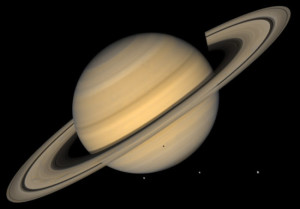


MEXICO: Scientists have created a new model that sheds light on how the cores of large gaseous planets formed.
Scientists believe they have solved the mystery of how giant gas planets like Jupiter and Saturn formed.
The recent findings reveal how the cores of gas giants slowly formed through the buildup of tiny space “pebbles,” Queen’s University reported.
“As far as we know, this is the first model to reproduce the structure of the outer solar system – two gas giants, two ice giants (Uranus and Neptune), and a pristine Kuiper belt beyond Neptune,” said researcher Martin Duncan of Queen’s University.
Previously, researchers had suggested the cores of gas giants formed from the accumulation of larger objects called planetesimals. This new research points out planet cores formed in this manner would not grow quickly enough to capture the gases that made up their atmospheres in the early days of the solar system. The lives of gas giants typically last between one and 10 million years, so their formation would need to remain within this timeframe, the Southwest Research Institute reported.
“The timescale problem has been sticking in our throats for some time,” said Hal Levison, an Institute scientist in the SwRI Planetary Science Directorate and lead author of the paper. “It wasn’t clear how objects like Jupiter and Saturn could exist at all. New calculations by the team show that the cores of Jupiter and Saturn could form well within the 10-million-year time frame if they grew by gradually accumulating a population of planetary pebbles — icy objects about a foot in diameter. Recent research has shown that gas can play a vital role in increasing the efficiency of accretion. So pebbles entering orbit can spiral onto the protoplanet and assimilate, assisted by a gaseous headwind.”

Karachi Port sets 138-year cargo handling record
KARACHI: Pakistan's maritime sector has achieved a major milestone as Karachi Port set a new record in its 138-year history...