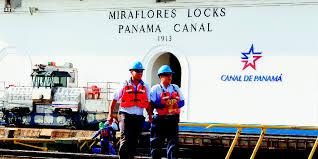
SINGAPORE: The logistics sector is very important for Panama’s economy. However, several leaders in this industry have said repeatedly that there is a lack of qualified bilingual personnel that could occupy the posts that are going to be created once the expanded Panama Canal starts operations in 2016.
In order to solve this problem, the Panamanian Association of Cargo Agents (APAC), together with the Logistic Cargo Training Center, the Logistic Business Council (COEL) and the International Federation of Freight Forwarders Associations (FIATA), based in Singapore, is offering seminars to create trainers.

The Universidad Interamericana de Panama is the place where the first course was dictated for eleven days and FIATA International Certification given to the participants as “Trainer of Trainers” (TOT).
This course is the first step to establish the second school in Latin America to train and validate trainers for FIATA, an organization to which around 40,000 transport and logistic companies belong to and that has a presence in 150 countries.
The operation of this second center (the first was founded in Mexico) is another tool that will contribute to boosting the competitiveness of personnel that work in the logistics sector of the, country with a scientific method of teaching and assessment.
The first course was dictated by Thomas Sim, president of the FIATA Vocational Trainers School. He has been responsible for establishing the international training parameters and FIATA validations since 2002.
The aims of this first course are to identify and strengthen the learning-teaching deficiencies, help build a team of FIATA International Trainers, improve the technical formation through a model to boost the logistics integrated service and optimize the training for the development, design, creation and implementation of Cargo Logistics Technical Training.
This initiative of COEL and APAC is a concerted effort to prepare the country and convert it into the most important logistics hub of the region. Although the government has created a Logistics Cabinet, nothing concrete has been done to improve the human capital or the infrastructure.
During CADE 2015, organized by the Panamanian Association of Business Executives (APEDE), the private sector urged the government to invest in logistics infrastructure so the country can take advantage of the opportunities that the expanded Canal will bring.
Just before the World Congress 2001 in Cancún, Quintana Roo, Mexico, and on the occasion of FIATA’s 75th anniversary, the presidency of FIATA decided to mark this particular event with the creation of the FIATA Foundation of Vocational Training, an institution which aims to assist associations in less-privileged countries to build up and enhance professional skills in the industry.
The management committee of the foundation coordinates the fundraising activities, evaluates the applications for funds and helps the associations on the implementation of training projects.