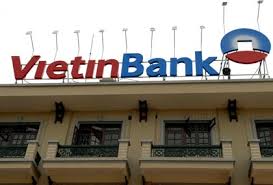
HANOI: VietinBank, the largest of Vietnam’s banks part-owned by private companies, has sought government approval to increase the foreign holdings in it to 30%, as part of a pilot scheme.
Currently, the government owns 64.46 per cent in Hanoi-based VietinBank, or the Vietnam Bank for Industry and Trade, while The Bank of Tokyo-Mitsubishi UFJ, a strategic investor, owns 19.73 per cent. Other overseas institutional shareholders include the International Finance Corporation (2.63 per cent) and the IFC Capitalisation (Equity) Fund LP (5.39 per cent).


But, Bao Viet Securities Company’s analyst Nguyen Thu Ha is of the opinion that the pilot programme is unlikely within the next one or two years, even as she added that removing the cap on foreign shareholding “brings with it sensitivity, which may have an impact on the security of the banking sector.”
In June, the country announced it will remove the foreign holding limit of 49 per cent in listed businesses. Accordingly, international investors will be able to fully own companies that are excluded from conditional business lines. Thus, banks will not be one of them.
Andy Ho, chief investment officer of VinaCapital, had said that Vietnam will not sell dominating stakes in “strategic sectors” such as banking, telecommunications, airlines and national defence.
Vietinbank will raise its charter capital from VND37.2 trillion ($1.66 billion) to VND49.2 trillion, to become the biggest bank by registered capital in Vietnam, following its merger with Petrolimex Group Commercial Bank which will be completed next month. In terms of total assets, it is currently the third largest, after Agribank and the Bank for Investment and Development of Vietnam.
From now until 2017, Vietinbank will fully apply the capital accord Basel II in risk management and its entire corporate governance, while within this year, the lender plans to issue VND8 trillion worth of bonds. A part worth VND4.5 trillion has been released by the end of June.
In addition, the bank has transformed its Lao-based unit from a branch into a bank subsidiary, to capitalise on the upcoming opportunities offered by the establishment of the ASEAN Economic Community. The bank’s stock price rose one per cent during morning trade on the Ho Chi Minh City Stock Exchange, and has been increasing for three successive sessions.