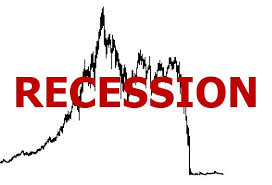
The International Monetary Fund has appreciated the performance of the Nawaz Sharif government in maintenance of the financial discipline during the last two and half years. However, pressure on the Pakistani rupee and near-collapse condition of the stock market indicates that the economy is not immune to the world financial crisis. The State Bank of Pakistan has rejected any prospects of the devaluation of the Pakistani rupee and Finance Minister Ishaq Dar has supported the amalgamation of three stock exchanges of the country into one as the Pakistan Stock Market to neutralize the adverse effects of the global recession. The crisis in the international markets is not yet over and rupee is still vulnerable, but it is hoped that the latest loan agreement with the Asian Development Bank will land the currency on the comfort zone. However, the government needs to work overtime to protect the economy as the picture of the global recession is grim and danger is still looming large.
The currency brokers and ‘money lords’ are bent upon eroding the worth of the national currency and some exporters also want low exchange rates. Strong value of a currency is considered psychological barrier to assess the economy and once the barrier is crossed, the economy nosedives. This happened at the end of the Musharraf era when rupee fell up to 100 a dollar from 60. The national currency is the merit and it should not be given in the hands of free market players. Various instances are there such as Iran and Zimbabwe where the currencies were flattened to flatten the economy. The government should devise a new mechanism to enhance tax net and generate revenues, but giving more powers to official machinery without its capacity building will end in fiasco.


Instead of going after corrupt officials, a new mechanism should be adopted to curtail the chances of corruption. The prevailing policy of ‘one corrupt is out and another is in’ must be discouraged. The tax to GDP ratio in Pakistan is the lowest in the region, thanks to the presence of black-sheep in the official cadres. The public debt has reached $163 billion, almost three-fold since 2008, whereas 44 percent of the tax revenues are spent on debt servicing. There is need to introduce capacity-building programmes for the officials and an awareness campaign for the business community to promote tax culture in the country. An effective system of check and balance must be in place to stop misuse of authority. The factual situation is that unbridled authority with immunity of accountability breeds corruption. The tax authorities should have to develop trust in the business community and transparency in the mechanism of tax collection.