

Customs Today
  • Home
  • Islamabad
  • Karachi
  • Lahore
  • National
  • Transfers and Postings
  • Chambers & Associations
  • Business
No Result
View All Result
Customs Today
  • Home
  • Islamabad
  • Karachi
  • Lahore
  • National
  • Transfers and Postings
  • Chambers & Associations
  • Business
No Result
View All Result
Customs Today
No Result
View All Result
Home Science & Technology Science

Researchers develop a drone for real-time wildlife tracking

byCustoms Today Report
03/09/2015
in Science, Science & Technology
Share on FacebookShare on Twitter

You might also like

Tesla driverless system to use updated radar technology

12/09/2016

Apple to develop its own self-driving technology

10/09/2016

SYDNEY: Elusive Australian species may no longer evade detection by researchers, with the help of new drone tracking technology.
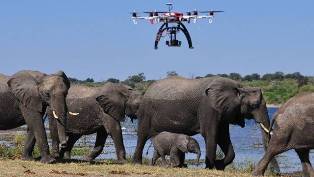
Researchers from the Australian National University (ANU) have teamed up with colleagues from the University of Sydney to develop a drone system for locating radio-tagged wildlife. The drone, believed to be a world-first tracker of this type, was successfully tested in the field by locating bettongs at Mulligan’s Flat, a woodland wildlife sanctuary in Canberra.
Fitting endangered wildlife with radio trackers or GPS devices is a commonplace method in ecology research, and a vital part of conservation practices in sanctuaries.
“You can understand what it is that the animal needs, so that you’re in a better position to be able to protect those elements of the environment that are important for their survival,” says ANU ecologist Dr Debbie Saunders, who was lead researcher of the drone development project.
But trekking after radio-tagged animals is challenging and time-consuming. Sometimes it means pushing through nearly impenetrable undergrowth, and at other times rocks can block the signal.
“What it entails is carrying around a one-to-two kilo receiver system, and holding an aerial in your hand up above your head,” Debbie explains. “Your arm gets tired very quickly, and you sometimes have to do it for hours to find an individual, depending on how difficult the terrain is.”

Related Stories

Tesla driverless system to use updated radar technology

byCT Report
12/09/2016

WASHINGTON: Electric carmaker Tesla announced Sunday it was upgrading its Autopilot software to use more advanced radar technology. In a...

Apple to develop its own self-driving technology

byCT Report
10/09/2016

SAN FRANCISCO: Apple may not become an automaker, but it still wants to develop its own self-driving technology. The iPhone-maker's...

NASA spots slowest known magnetar

byCT Report
10/09/2016

WASHINGTON: Astronomers have found evidence of a magnetar - magnetised neutron star - that spins much slower than the slowest...

‘YouTubers’ outshining old-school television

byCT Report
09/08/2016

SAN FRANCISCO: A media revolution is taking place, and most people over 35 years of age aren’t tuned in. Millennial...

Next Post

Researchers solve important step in bacterial DNA replication

  • Terms and Conditions
  • Disclaimer

© 2011 Customs Today -World's first newspaper on customs. Customs Today.

No Result
View All Result
  • Transfers and Postings
  • Latest News
  • Karachi
  • Islamabad
  • Lahore
  • National
  • Chambers & Associations
  • Business
  • About Us

© 2011 Customs Today -World's first newspaper on customs. Customs Today.