
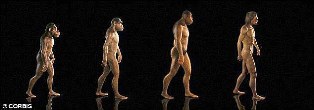


WASHINGTON: The evolution of the human body’s size and shape has gone through four main stages, a study of 430,000-year-old fossils collected in northern Spain has found.
A large international research team studied the body size and shape in the human fossil collection from the site of the Sima de los Huesos in the Sierra de Atapuerca in northern Spain.
Dated to around 430,000 years ago, this site preserves the largest collection of human fossils found to date anywhere in the world, researchers said.
The researchers found that the Atapuerca individuals were relatively tall, with wide, muscular bodies and less brain mass relative to body mass compared to Neanderthals.
The Atapuerca humans shared many anatomical features with the later Neanderthals not present in modern humans, and analysis of their postcranial skeletons (the bones of the body other than the skull) indicated that they are closely related evolutionarily to Neanderthals.
“This is really interesting since it suggests that the evolutionary process in our genus is largely characterised by stasis (ie little to no evolutionary change) in body form for most of our evolutionary history,” said Rolf Quam, anthropologist at the Binghamton University in New York.
Comparison of the Atapuerca fossils with the rest of the human fossil record suggests that the evolution of the human body has gone through four main stages, depending on the degree of arboreality (living in the trees) and bipedalism (walking on two legs).

Karachi Port sets 138-year cargo handling record
KARACHI: Pakistan's maritime sector has achieved a major milestone as Karachi Port set a new record in its 138-year history...


