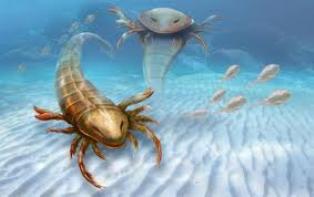


HONG KONG: Researchers at Yale and the University of Iowa have discovered a fossil of Earth’s oldest large aquatic predator, a human-sized “giant sea scorpion” (albeit without the stinger-tipped tail). Named “Pentecopterus” in honor of the penteconter, an ancient Greek warship, the 467-million-year-old fossil predates the dinosaurs by a couple hundred million years.
A study announcing the finding, published Tuesday in the journal BMC Evolutionary Biology, says that the nearly 6-foot-long Pentecopterus boasted a streamlined body, capped with a long head shield. A series of large limbs underneath helped it trap prey, likely soft, worm-like creatures based on the shape of its jaw, reports Newsweek.
As an “eurypterid” arthropod, Pentecopterus is a distant relative to a number of modern animals, including ticks, spiders and lobsters.
“This is the first real big predator. I wouldn’t have wanted to be swimming with it,” James Lamsdell, a postdoctoral associate at Yale and the lead author of the study, told The Guardian. “There’s something about bugs. When they’re a certain size they shouldn’t be allowed to get bigger.”
In an email to The Huffington Post, Lamsdell explained that, while animals such as the Anomalocaris are indeed older and could grow to a large size (though were generally about meter long), unlike Pentecopterus, it “was not capable of eating other large organisms or animals with hard parts.” Pentecopterus, in contrast, was much more predatory.

Karachi Port sets 138-year cargo handling record
KARACHI: Pakistan's maritime sector has achieved a major milestone as Karachi Port set a new record in its 138-year history...