CANBERRA: Australia’s dairy industry is set to lose at least $20 million in expected tariff cuts if a free trade agreement with China isn’t implemented before Christmas, according to Australian Dairy Farmers president Noel Campbell.
Pressure is mounting on Labor to support the deal, which the Abbott government signed in June. But if it doesn’t pass Parliament before the end of the 2015 calendar year, the tariff reduction schedule will be pushed back 12 months.


Australian workers unions have launched an advertising campaign against the agreement, labelling it as “job destroying” and federal Opposition leader Bill Shorten has continued to raise concerns about the deal.
Australian Dairy Farmers President Noel Campbell says delaying the ratification of ChAFTA to beyond Christmas will cost the dairy industry at least $20 million. Australian Dairy Farmers President Noel Campbell says delaying the ratification of ChAFTA to beyond Christmas will cost the dairy industry at least $20 million.
The unions argue the agreement removes any requirement that employers have to offer jobs to locals workers first, and allows Chinese companies to bring in their own workforce for projects valued at more than $150 million.
But Mr Campbell said the deal would create jobs, adding 600-700 to the dairy industry in its first year, as well as longer term growth. Under the agreement tariffs of up to 20 per cent on Australian dairy products will be abolished within four to 11 years.
Mr Campbell said there was limited growth in the domestic market, which is mature. He said Japan, which is a big importer of Australian dairy products, was the same. “China gives farmers access to a growing market – only one province would huge,” Mr Campbell said.
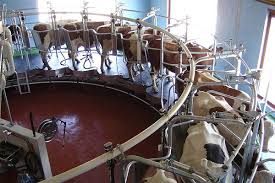
“There are jobs not only in primary production but also in processing, and that happens mainly in rural communities because dairy is a perishable product that needs to be processed close to its source,” Mr Campbell said. Dairy farmers are facing a season of possibly no milk price increases amid global volatility on dairy markets.
“If that Chinese trade deal doesn’t come off, then I think that will do a lot to dampen confidence in the industry,” said former United Dairyfarmers Victoria president Tyran Jones. “If it does come to fruition, there is enormous upside with preferential access to that market.”
It’s not just farmers who are calling on federal politicians to pass the deal. Greg Keith, the chief executive of corporate advisory firm Grant Thornton, said there were also opportunities for medium-sized businesses, which he said “powered the Australian economy”. “It can only be a win if it [the China Australia free trade agreement] is ratified this year,” Mr Keith said.
“A large portion of mid-sized business are privately owned, and require individuals to put their life savings on the line. Knowing that they have the support of the government, both in legislation and financial incentives, gives them protection to invest and to grow.” Laura McBain, the chief executive of organic baby food maker Bellamy’s, said free trade agreements delivered more than tariff cuts.
“In terms of the customs and tariff duties there is a minimum impact for Bellamy’s because of the concessional treatment that Australia has been receiving, in any event, for infant formula,” Ms McBain said.
“However, there is a bigger piece in this and that is about the signs it sends to Chinese consumers and business people about Australia being open for business and ready to trade. “Those are the overarching themes that we need to be considering.”