

Customs Today
  • Home
  • Islamabad
  • Karachi
  • Lahore
  • National
  • Transfers and Postings
  • Chambers & Associations
  • Business
No Result
View All Result
Customs Today
  • Home
  • Islamabad
  • Karachi
  • Lahore
  • National
  • Transfers and Postings
  • Chambers & Associations
  • Business
No Result
View All Result
Customs Today
No Result
View All Result
Home Science & Technology Science

430,000 years old fossils show human body went through four stages of evolution

byCustoms Today Report
04/09/2015
in Science, Science & Technology
Share on FacebookShare on Twitter

You might also like

Tesla driverless system to use updated radar technology

12/09/2016

Apple to develop its own self-driving technology

10/09/2016

MEXICO: The team, directed by Prof Juan Luis Arsuaga of the Complutense University of Madrid, studied the body size and shape in the fossil collection from the site of the Sima de los Huesos (Pit of Bones) in Spain.
Dated to around 430,000 years ago, this cave site preserves a large collection of fossils attributed to an enigmatic hominin species, named the Sima de los Huesos hominin after the site.
Prof Arsuaga and co-authors found that the Sima de los Huesos individuals were relatively tall, with wide, muscular bodies and less brain mass relative to body mass compared to Neanderthals. They shared many anatomical features with the later Neanderthals not present in anatomically modern Homo sapiens, and analysis of their postcranial skeletons (the bones of the body other than the skull) indicated that they are closely related evolutionarily to Neanderthals.
“This is really interesting since it suggests that the evolutionary process in our genus is largely characterized by stasis (i.e. little to no evolutionary change) in body form for most of our evolutionary history,” said team member Dr Rolf Quam of Binghamton University.
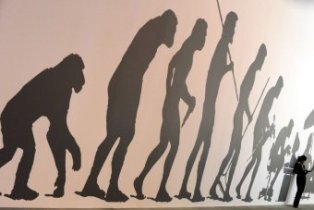
Comparison of the Sima de los Huesos fossils with the rest of the human fossil record suggests that the evolution of the human body has gone through four main stages, depending on the degree of arboreality (living in the trees) and bipedalism (walking on two legs).
The Sima de los Huesos fossils represent the third stage, with tall, wide and robust bodies and an exclusively terrestrial bipedalism, with no evidence of arboreal behaviors.

Related Stories

Tesla driverless system to use updated radar technology

byCT Report
12/09/2016

WASHINGTON: Electric carmaker Tesla announced Sunday it was upgrading its Autopilot software to use more advanced radar technology. In a...

Apple to develop its own self-driving technology

byCT Report
10/09/2016

SAN FRANCISCO: Apple may not become an automaker, but it still wants to develop its own self-driving technology. The iPhone-maker's...

NASA spots slowest known magnetar

byCT Report
10/09/2016

WASHINGTON: Astronomers have found evidence of a magnetar - magnetised neutron star - that spins much slower than the slowest...

‘YouTubers’ outshining old-school television

byCT Report
09/08/2016

SAN FRANCISCO: A media revolution is taking place, and most people over 35 years of age aren’t tuned in. Millennial...

Next Post

Australia develop killer robots to terminate Reef-eating starfish

  • Terms and Conditions
  • Disclaimer

© 2011 Customs Today -World's first newspaper on customs. Customs Today.

No Result
View All Result
  • Transfers and Postings
  • Latest News
  • Karachi
  • Islamabad
  • Lahore
  • National
  • Chambers & Associations
  • Business
  • About Us

© 2011 Customs Today -World's first newspaper on customs. Customs Today.