
WASHINGTON: While opponents of U.S. legislation that would track port performance at the nation’s 25 busiest container ports argue about the feasibility, they’ll have hard time arguing it would be too costly for the ports and the federal government.
According to the U.S. Congressional Budget Office, it would cost roughly $9 million over the course of four years — about $2.25 million annually — for the Department of Transportation to collect the monthly statistics the legislation requires.
It’s an expense that the CBO said “would be small” for the ports themselves, as they already collect some, if not most, of the information they would have to turn over to the federal government.
“Ports may incur additional costs to collect new information, but CBO estimates that the cost of collecting the additional information would not be substantial,” the agency said in its official report.
The legislation, co-sponsored by the Senate’s third-ranking Republican John Thune of South Dakota, was drafted in the aftermath of the crippling West Coast longshore labor negotiations this year and aimed at arming Congress with the metrics and statistics to prevent future disruptions before they occur.
The bill, however, was stripped of some key provisions earlier in the summer when the Senate passed the bill before leaving for recess. In July, lawmakers backed by labor unions and the ports themselves stripped out what is arguably the crux of the bill: productivity reports during negotiations with unionized port labor.
The omission was a blow to shippers.
“What drove the Thune bill is the push from the shippers,” said Paul Bea, a principal at PHB Public Affairs, a maritime consulting firm in Washington, D.C.
The AFL-CIO argued the legislation would politicize federal data collection and allow statistics to be used to undermine unions’ negotiating positions during talks.
But, for shippers, the data would have been a valuable tool to help navigate choppy waters during often protracted and disruptive disagreements between unions and port operators.
“Effective in arming shippers and governors during talks? Maybe not. At least I am hearing disappointment in that quarter,” Bea told JOC.com via email. “But, there is the other driver for data.”
That is freight system condition and performance evaluation, he said. The monthly metrics from ports could be of some use to “policy and planning folk,” Bea explained.
“Right now the bill looks more like something U.S. DOT might prefer than what shippers do,” he said.
The DOT reports required by the bill — done in consultation with the Commerce and Labor departments — could give legislators estimates on the economic impact and how long it will take for port productivity to be restored, a snapshot of the before and after effects of waterside labor negotiations.
“Some folks are skeptical,” Bea said. There is still the question, he said, of “what data is the right data and how to get it.”
Even if the bill were passed, the federal government would still have to find a way to standardize port performance data, something the American Association of Ports Authorities has argued is a major stumbling block before lawmakers.
The lack of national port productivity standards has left the federal government with only a smattering of different metrics, including monthly container volume at ports, truck turns times at the Los Angeles-Long Beach port complex collected by a trucker group, and West Coast port productivity statistics provided by the Pacific Maritime Association. INTTRA, the world’s largest multicarrier e-commerce network, and JOC Port Productivity provide more detailed port productivity statistics, but only the major takeaways from their findings are made public.
The U.S. Senate passed the Port Performance Act in August as part of a six-year highway spending bill, also known as the DRIVE Act. That bill is awaiting a vote in the House of Representatives now that Congress has returned from its summer recess.
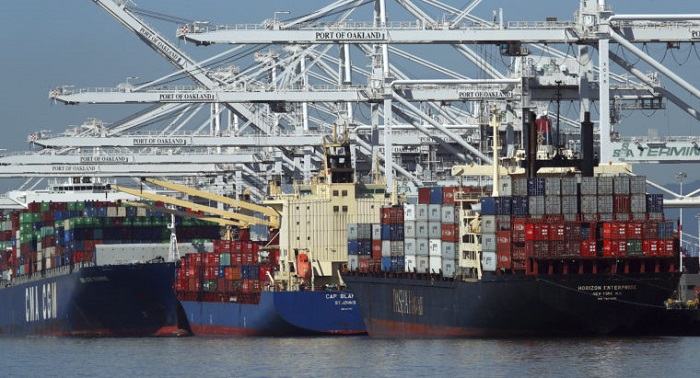
Shipping activity at Port Qasim on February 11
KARACHI: Three ships namely, Glen Canyon, Al-Salam- II and TSM Pollux carrying Containers, Gas oil and Palm oil were arranged...