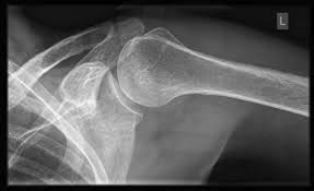


DUBLIVE: The human race evolved from apes, this has been known to us for years now but what we didn’t know was the connecting ancestor between the tree-dwelling chimps and the cave man. Recently a team of researchers unearthed three shoulder bones of an African ape-like ancestor who could be the missing species between humans and chimps.
Scientists from the UC San Francisco have discovered that the shape of the shoulder bones in modern day humans could solve the mystery behind the obsolete ancestor.
Researchers note that modern day humans have a unique shoulder bone structure because of its lateral orientation with orangutans and the scapular blade shape with African apes.
Young is also the lead author of this study and added that human shoulder blades are odd, separated from all the apes. How did the human lineage evolve and where did the common ancestor to modern humans evolve a shoulder like ours? He noted that seems that the alteration in the shape of the shoulders could have taken place as humans started using tools and stopped climbing trees.
“Humans are unique in many ways. We have features that clearly link us with African apes, but we also have features that appear more primitive, leading to uncertainty about what our common ancestor looked like. Our study suggests that the simplest explanation, that the ancestor looked a lot like a chimp or gorilla, is the right one, at least in the shoulder,” informed Nathan Young, PhD, assistant professor at UC San Francisco School of Medicine.
Nathan Young and his colleagues have found crucial clues to the common ancestors of humans and chimpanzees that gives clues why modern humans can throw something with force. He added, “For a baseball pitcher, depending on your shoulder shape, you might want to emphasize some strengthening exercises over others to protect your rotator cuff.”
The research could assist scientists in understanding these variations and caution those who may have a higher risk of injury. Every year about 2 million rotator cuff injuries are recorded in Americans because the shoulder shape has varied a lot among modern humans.

Karachi Port sets 138-year cargo handling record
KARACHI: Pakistan's maritime sector has achieved a major milestone as Karachi Port set a new record in its 138-year history...