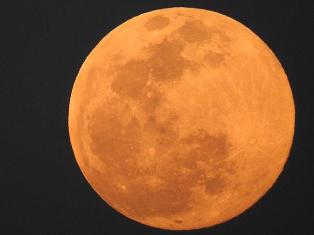


FRANCE: We are all in for a splendid spectacle this month on September 27th because there will be a rare and closest supermoon of the year. It will occur in the Northern Hemisphere and enjoy the title of Harvest Moon. In addition to all this, the red supermoon will create a total lunar eclipse and can be seen on the night of September 27-28 from the Americas, the Atlantic, Greenland, Europe, Africa and the Middle East.
The time to watch out for on September 28, 2015 is 2:51 UTC (9:51 p.m. CDT in the U.S.). What makes this supermoon special is the fact that it is not just going to be large along with an eclipse but also be closest to Earth for all of 2015.
The supermoon has two main aspects; one is the moon that looks bigger than usual and the other is the lunar eclipse. This natural but rare phenomenon has happened just five times since the year 1910. After this September, it will not happen again till the year 2029. NASA explains the rare spectacle with visualizations.
When the moon is close to full, observers can see the strong contrast between its grey plains and white mountainous regions, which some people see as the “man in the moon” and others see as a rabbit.
With the naked eye or a small pair of binoculars, you can easily see the three main dark plains on the upper half of the moon, which bear the fanciful names of the Oceanus Procellarum (Ocean of Storms), Mare Serenitatis (Sea of Serenity) and Mare Imbrium (Sea of Rains). These were named before scientists knew that there were no open bodies of water on the moon, and no atmosphere to cause storms or rains.
What is supermoon: A moon is considered “super” when a full moon reaches the closest point to Earth on its elliptical orbit. This makes it appear about 14 percent larger and about 30 percent brighter.

Karachi Port sets 138-year cargo handling record
KARACHI: Pakistan's maritime sector has achieved a major milestone as Karachi Port set a new record in its 138-year history...