

Customs Today
  • Home
  • Islamabad
  • Karachi
  • Lahore
  • National
  • Transfers and Postings
  • Chambers & Associations
  • Business
No Result
View All Result
Customs Today
  • Home
  • Islamabad
  • Karachi
  • Lahore
  • National
  • Transfers and Postings
  • Chambers & Associations
  • Business
No Result
View All Result
Customs Today
No Result
View All Result
Home Science & Technology Science

Astronomers discovered red dwarf stars close to our solar system

byCustoms Today Report
17/09/2015
in Science, Science & Technology
Share on FacebookShare on Twitter

You might also like

Tesla driverless system to use updated radar technology

12/09/2016

Apple to develop its own self-driving technology

10/09/2016

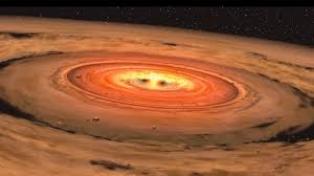
SYDNEY: Astronomers have discovered a rare collection of young red dwarf stars close to our solar system that could give us a glimpse of slow-motion planet formation. Astronomers from the Australian National University (ANU) and UNSW Canberra found large discs of dust around two of the stars, tell-tale signs of planets in the process of forming.
“We think the Earth and all the other planets formed from discs like these so it is fascinating to see a potential new solar system evolving,” said lead researcher Dr Simon Murphy from the ANU Research School of Astronomy and Astrophysics.
However, other stars of this age usually do not have discs any more.
“The red dwarf discs seem to live longer than those of hotter stars like the Sun. We do not understand why,” Dr Murphy added.
The discovery of objects like these two challenges current theories about planet formation.
“It suggests the planet forming process can endure a lot longer than previously thought,” noted co-author professor Warrick Lawson from UNSW Canberra.
The red dwarves may also host planets that have already formed from the dusty discs.
The giveaway that the red dwarves had discs around them was an unusual glow in the infrared spectrum of the stars.
Although the discs were not observed directly, Dr Murphy said such close red dwarves offered a good chance of catching a rare direct glimpse of a disc, or even a planet, by employing specialised telescopes.

Related Stories

Tesla driverless system to use updated radar technology

byCT Report
12/09/2016

WASHINGTON: Electric carmaker Tesla announced Sunday it was upgrading its Autopilot software to use more advanced radar technology. In a...

Apple to develop its own self-driving technology

byCT Report
10/09/2016

SAN FRANCISCO: Apple may not become an automaker, but it still wants to develop its own self-driving technology. The iPhone-maker's...

NASA spots slowest known magnetar

byCT Report
10/09/2016

WASHINGTON: Astronomers have found evidence of a magnetar - magnetised neutron star - that spins much slower than the slowest...

‘YouTubers’ outshining old-school television

byCT Report
09/08/2016

SAN FRANCISCO: A media revolution is taking place, and most people over 35 years of age aren’t tuned in. Millennial...

Next Post

Taiwan stocks soar in early trade, TAIEX up 1.5%

  • Terms and Conditions
  • Disclaimer

© 2011 Customs Today -World's first newspaper on customs. Customs Today.

No Result
View All Result
  • Transfers and Postings
  • Latest News
  • Karachi
  • Islamabad
  • Lahore
  • National
  • Chambers & Associations
  • Business
  • About Us

© 2011 Customs Today -World's first newspaper on customs. Customs Today.