Customs Today
  • Home
  • Islamabad
  • Karachi
  • Lahore
  • National
  • Transfers and Postings
  • Chambers & Associations
  • Business
No Result
View All Result
Customs Today
  • Home
  • Islamabad
  • Karachi
  • Lahore
  • National
  • Transfers and Postings
  • Chambers & Associations
  • Business
No Result
View All Result
Customs Today
No Result
View All Result
Home Science & Technology Science

Red dwarf stars could unlock secrets of planet formation

byCustoms Today Report
18/09/2015
in Science, Science & Technology
Share on FacebookShare on Twitter

HONG KONG: A “serendipitous discovery” only 400 light years from Earth could challenge current theories on how planets form and even allow future astronomers to witness the birth of a solar system.

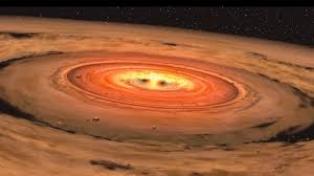
An unusual glow in the infrared spectrum of two young red dwarf stars in the Southern Cross and Centaurus constellations led astronomers from the Australian National University and UNSW Canberra to discover large discs of dust surrounding the stars.


You might also like

Tesla driverless system to use updated radar technology

12/09/2016

Apple to develop its own self-driving technology

10/09/2016

These discs contained the raw materials from which planets formed, lead researcher Dr Simon Murphy, from ANU’s Research School of Astronomy and Astrophysics, said.
“We didn’t really expect to find them, we were actually searching for stars belonging to a completely different young group and by pure luck we stumbled across this group of interesting stars,” Dr Murphy said.
Circumstellar discs of dust and debris are born with a star and often disappear within millions years.
“Some of the dust and gas goes to form planets, some of it’s accreted onto the star and some of it’s blown away from the system by the star,” Dr Murphy said.
“Usually by 10 million years old, discs are very rare around stars because the planets have already formed.”
Dr Murphy said the stars his team found are believed to be about 16 million years old, hence their surprise.
It could be that these stars are much younger than the cluster around them but Dr Murphy believes it is evidence that dust discs linger longer around lower-mass stars.


Related Stories

Tesla driverless system to use updated radar technology

byCT Report
12/09/2016

WASHINGTON: Electric carmaker Tesla announced Sunday it was upgrading its Autopilot software to use more advanced radar technology. In a...

Apple to develop its own self-driving technology

byCT Report
10/09/2016

SAN FRANCISCO: Apple may not become an automaker, but it still wants to develop its own self-driving technology. The iPhone-maker's...

NASA spots slowest known magnetar

byCT Report
10/09/2016

WASHINGTON: Astronomers have found evidence of a magnetar - magnetised neutron star - that spins much slower than the slowest...

‘YouTubers’ outshining old-school television

byCT Report
09/08/2016

SAN FRANCISCO: A media revolution is taking place, and most people over 35 years of age aren’t tuned in. Millennial...

Next Post

Intel Corp invests $67m in 8 Chinese technology startups

  • Terms and Conditions
  • Disclaimer

© 2011 Customs Today -World's first newspaper on customs. Customs Today.

No Result
View All Result
  • Transfers and Postings
  • Latest News
  • Karachi
  • Islamabad
  • Lahore
  • National
  • Chambers & Associations
  • Business
  • About Us

© 2011 Customs Today -World's first newspaper on customs. Customs Today.