

LONDON: DNV GL has issued a new class notation for ship-to-ship fuel transfers, aimed at improving safety at LNG-bunkering facilities.
The notation sets requirements for LNG carriers and for barges equipped to carry and regularly supply LNG to gas-fuelled ships.
“The use of environmentally friendly gas fuels has increased significantly over the past few years, calling for a greater number of fuel transfer facilities on land and at sea, especially for LNG,” DNV GL Principal Engineer Yury Ilchenko told IHS Maritime.
“But ports have raised serious safety concerns over transfer operations within port limits, frequently deeming them as too risky. Many port authorities thus oppose efforts to increase the availability of gas fuels in ports.”
The notation’s specifications are now expected to ease ports’ safety fears, so that more LNG-bunkering facilities become available to the shipping industry.
The notation’s statutory survey involves detailed inspection of material and equipment, such as cranes and hoses, exposed to very low temperatures, alongside the standard regulatory checks on all safety and firefighting equipment, DNV GL told IHS Maritime.
Guidance under the notation covers aspects including the safety of gas bunker vessels, the quality of alarms and onboard bunkering equipment, and the operation of gas-detection systems.
Compliance with DNV GL’s new class notation will “increase the acceptance of safe gas fuel bunkering operations by ports and local authorities and put bunker ship owners in a stronger position in the market”, said Ilchenko.
He added that bunkering standards have “lagged behind” those for using gas as a fuel.
“The maritime industry has focused on developing standards for gas-fuelled ships rather than bunkering arrangements for them,” he said.
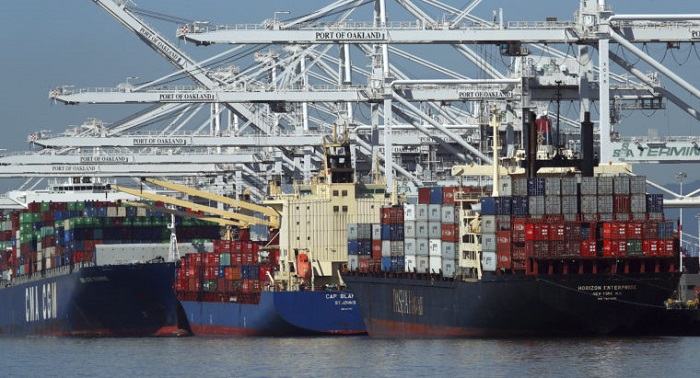
Shipping activity at Port Qasim on February 11
KARACHI: Three ships namely, Glen Canyon, Al-Salam- II and TSM Pollux carrying Containers, Gas oil and Palm oil were arranged...
