
Shipping is vitally important to the global community, playing a key role in sustainable development. The world depends on a safe, secure, and efficient shipping industry; and the shipping industry depends on an adequate supply of seafarers to operate the ships that carry the essential cargoes we all rely on.
Shipping is highly technical, demanding considerable skill, knowledge and expertise from those who work in it. And it is impossible to learn everything on the job.
As a truly international industry, shipping needs a global network of specialist education and training establishments to ensure a continuing stream of high-calibre recruits.
Maritime education and training must be of a high and consistent quality, throughout the world. They must be skills-based, competence-based and utilise the latest technology – such as simulators reflecting modern ships and up-to-date bridge layouts.
But maritime education and training are not just for seafarers. Maritime education needs broad coverage. Naval architecture, marine engineering, maritime law, and many other fields all require specialist training.
IMO has a long and wide-ranging involvement in the human element of shipping. Maritime education and training are central to its work in this area.
The 1978 International Convention on Standards of Training, Certification and Watchkeeping for Seafarers has set the international benchmark for seafarer training and education. Compliance with its standards is essential for serving on board ships.
Significant amendments to the Convention were adopted in 2010 in Manila. Yet much remains to be done by parties to ensure effective implementation before the end of the transition period on January 1, 2017.
Looking at the wider spectrum, IMO’s Integrated Technical Cooperation Programme provides a capacity-building framework to assist developing countries to enhance the skills and proficiencies needed for effective compliance with IMO instruments.
This, together with IMO’s global maritime training institutions, the World Maritime University and the International Maritime Law Institute, helps maintain a flow of high level managers, policymakers and other key personnel.
We are very proud of these institutions, and of the many graduates they have produced who now hold positions of responsibility and influence within the maritime community.
Human Element
In the future, the human element in shipping will be increasingly important, not just for the commercial reasons but also as the industry moves towards ever higher standards of safety, environmental impact, and sustainability. It is the human element that will translate new objectives in these areas into solid actions. Further effort must be made to bring new generations into seafaring as a profession. Seafaring must be seen to appeal to new generations as a rewarding and fulfilling career.
It is impossible to overstress how important this is. Without a quality labour force, motivated, trained, and skilled to the appropriate international standards, shipping cannot thrive. Not only that, all the many advances that have been made, in terms of safety and environmental impact, are at risk if personnel within the industry are unable to implement them properly.
The importance of training and education for the maritime personnel of today and tomorrow is greater than ever before.
Effective standards of training are the bedrock of a safe and secure shipping industry, and that is why this year, ‘Maritime Education and Training’ is our theme for World Maritime Day.
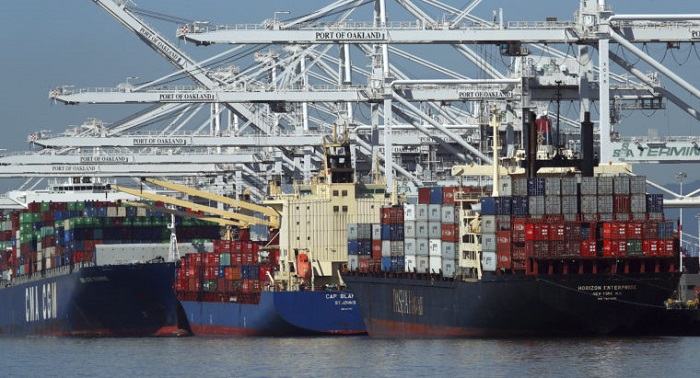
Shipping activity at Port Qasim on February 11
KARACHI: Three ships namely, Glen Canyon, Al-Salam- II and TSM Pollux carrying Containers, Gas oil and Palm oil were arranged...