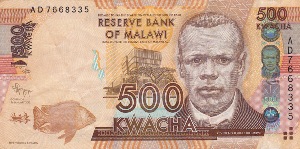
LUSAKA: Zambia will review rules governing its currency market after the kwacha’s steep fall earlier this week and could counter inflationary pressures from the depreciation by tightening monetary policy, a central bank official said.
The kwacha plunged 17 percent against the dollar on Monday to a record low due to the sharp slide in prices for its copper exports and a credit rating downgrade.

The most likely impact will probably show in December
The currency of Africa’s second largest copper producer recovered somewhat on Tuesday, with traders citing intervention by the central bank.
The sharp decline is worrying Zambia’s commercial banks and central bank, said Bwalya Ng’andu, deputy governor for operations at the Bank of Zambia.
“The move in the exchange rate is not reflecting a move in the fundamentals … the supply side and the demand side seem to be more or less the same,” Ng’andu told Reuters on the sidelines of an investment conference in London.
“We need to look at the way the market is performing; it is possible that the market rules are … not responding correctly to a situation when there is low liquidity in the market … rules are made, and at some point the rules may become part of the problem,” he said.
Ng’andu declined to give any further details on what the possible changes could be but added that regulators would look to tweak existing rules rather than create additional ones.
Currencies across sub-Saharan Africa where currencies from the Ghanaian cedi to Angolan kwanza have depreciated steadily this year.
While Ghana has raised interest rates, Nigeria has chosen to defend an official naira rate by freezing interbank currency trading.
Asked how the central bank would balance increasing inflationary pressures caused by the depreciation with slowing economic growth, Ng’andu said one response would be to look at monetary policy and whether to tighten it.
“We will look at all the options on the table and apply appropriate measures as the situation develops,” he said. “(Tightening) is an option.”
Ng’andu added he expected to see the effect of the latest depreciation to feed through to inflation numbers in three to four months’ time, though simulations showed the pass-through was 0.02 percent.
“The most likely impact will probably show in December.”
He declined to predict where the depreciation may leave the current account or fiscal deficit in the short to medium term, though added it was in the early stages of fiscal consolidation.
“It is absolutely essential that it starts and that it will be happening.”