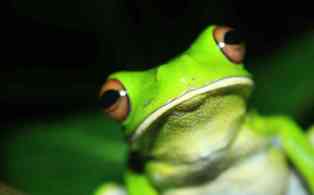


CANADA: Frogs face mass extinction with new research showing hundreds of species have been lost over three decades due to factors such as pollution and habitat destruction.
If extinction rates continue unabated, hundreds more frog species could be lost within the next century.
John Alroy, study author and associate professor at Macquarie University’s Department of Biological Sciences, analysed international data on the decline in frog populations for his research, to be published in Proceedings of the National Academy of Sciences of the USA on Tuesday.
Dr Alroy found 200 of the world’s 6355 known frog species died out in a 30-year period from the 1960s to the 1990s.
“That’s pretty bad because if you project that forward for the next couple of centuries you end up with a percentage which would resemble a mass extinction,” he said.
Even if there is no increase in environmental threats, Dr Alroy’s conservative estimate is that another 6.9 per cent of species will die out in the next hundred years.
“Everything is getting worse for frogs,” he said.
While global warming might be contributing to the decline in frog populations, Dr Alroy said that the majority of species had been lost to due to other factors.
“The losses are coming from the introduction of invasive species, the spread of a fungus called BD (Batrachochytrium dendrobatidis), habitat destruction and, potentially, pollution,” he said.
The largest loss of species has occurred in Central America and Brazil, where populations have been devastated by the BD fungus.
Dr Alroy also noted significant declines in frog species in Papua New Guinea, which could be attributed to deforestation.

Karachi Port sets 138-year cargo handling record
KARACHI: Pakistan's maritime sector has achieved a major milestone as Karachi Port set a new record in its 138-year history...