

Customs Today
  • Home
  • Islamabad
  • Karachi
  • Lahore
  • National
  • Transfers and Postings
  • Chambers & Associations
  • Business
No Result
View All Result
Customs Today
  • Home
  • Islamabad
  • Karachi
  • Lahore
  • National
  • Transfers and Postings
  • Chambers & Associations
  • Business
No Result
View All Result
Customs Today
No Result
View All Result
Home Science & Technology Science

Chernobyl animals worse affected by humans than thought: Study

byCustoms Today Report
07/10/2015
in Science, Science & Technology
Share on FacebookShare on Twitter

You might also like

Tesla driverless system to use updated radar technology

12/09/2016

Apple to develop its own self-driving technology

10/09/2016

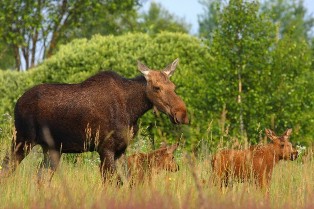
WASHINGTON: After almost three decades of radiation exposure at the site of the Chernobyl nuclear disaster, unexpectedly huge wildlife populations are thriving. Why? Because the humans are gone.
In this month’s issue of the journal Current Biology, a team of international researchers shares its findings that many animals, including elk, wild boars, wolves, and two kinds of deer, are abundant in the 1,621 square miles of devastation following the explosion of a nuclear power plant. The 1986 Chernobyl disaster displaced more than 300,000 human residents, caused 31 direct human deaths, and an estimated 40,000 cancer deaths.
The research team found “no negative effect on mammal abundance,” 30 years after the accident, despite many devastating affects to animals during the time and immediate aftermath of the explosion. The paper notes that for the first six months after the disaster, extremely high dosages of radiation “significantly affected animal health and reproduction at Chernobyl.” But as animal populations recovered, they came back even stronger, as the greatest threat to their existence – humans – had vacated their habitat.
“This doesn’t mean radiation is good for wildlife, just that the effects of human habitation, including hunting, farming and forestry, are a lot worse,” said Jim Smith, a professor of environmental science at the University of Portsmouth in the U.K. and the team’s coordinator.

Related Stories

Tesla driverless system to use updated radar technology

byCT Report
12/09/2016

WASHINGTON: Electric carmaker Tesla announced Sunday it was upgrading its Autopilot software to use more advanced radar technology. In a...

Apple to develop its own self-driving technology

byCT Report
10/09/2016

SAN FRANCISCO: Apple may not become an automaker, but it still wants to develop its own self-driving technology. The iPhone-maker's...

NASA spots slowest known magnetar

byCT Report
10/09/2016

WASHINGTON: Astronomers have found evidence of a magnetar - magnetised neutron star - that spins much slower than the slowest...

‘YouTubers’ outshining old-school television

byCT Report
09/08/2016

SAN FRANCISCO: A media revolution is taking place, and most people over 35 years of age aren’t tuned in. Millennial...

Next Post

Midday: Upward momentum continues as KSE-100 index adds 76pts

  • Terms and Conditions
  • Disclaimer

© 2011 Customs Today -World's first newspaper on customs. Customs Today.

No Result
View All Result
  • Transfers and Postings
  • Latest News
  • Karachi
  • Islamabad
  • Lahore
  • National
  • Chambers & Associations
  • Business
  • About Us

© 2011 Customs Today -World's first newspaper on customs. Customs Today.