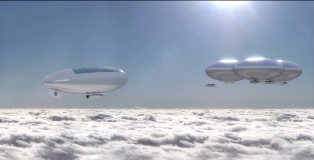


LONDON: The Americans space agency NASA said that it is presently studying the possibilities to send a manned mission into the atmosphere of Venus. The agency hopes that one day, it will build floating cities in the planet’s atmosphere.
The proposed The Venus Emissivity, Radio Science, InSAR, Topography, and Spectroscopy spacecraft (VERITAS) would investigate the planet’s surface to determine just how much it has in common with Earth, and whether it was ever habitable.
The program called High Altitude Venus Operational Concept (HAVOC) will build floating cities on Venus. The program is presently being pursued by engineers and scientists at the Systems Analysis and Concepts Directorate at NASA’s Langley Research Center in Hampton, Virginia.
Venus is the second-nearest planet to the Sun. Venus is also called as ‘sister planet’ of earth, but still it is extremely inhospitable for humans and most living beings.
The planet has a similar gravity, size and bulk density as that of earth. It has a highly dense atmosphere, which consists of more than 96% carbon dioxide. The atmospheric pressure at the planet’s surface is 92 times that of earth and mean surface temperature is 862 degree Fahrenheit.
Despite a long list of problems, Venus’ atmosphere is considered potentially stable. As per experts, there is no air which makes it almost perfect for creating small cloud cities, which would float naturally 50km above the planet’s surface.
NASA said HAVOC would first undertake several missions using robots, and if those missions are successful then they would be followed-up by a crewed mission.

Karachi Port sets 138-year cargo handling record
KARACHI: Pakistan's maritime sector has achieved a major milestone as Karachi Port set a new record in its 138-year history...