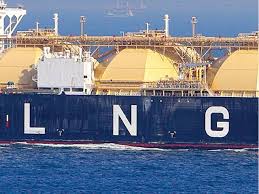
SEOUL: South Korea will soon receive liquefied natural gas (LNG) from Santos’ US$18.5 billion GLNG facility, which saw the first shipment leave Curtis Island on 16 October.
South Korea is a country that relies on imports to meet about 97% of its total primary energy consumption. According to the US Energy Information Administration (EIA), in 2014, the Koreans imported 1.8 Tcf of LNG, with almost two-thirds bought from Qatar, Indonesia, Malaysia and Oman.


Since the country has no international oil or natural gas pipelines, it relies solely on tanker shipments of LNG and crude oil. The first cargo from GLNG is being carried by the Malaysian-owned LNG vessel, Seri Bakti, and will be delivered to South Korea in the coming weeks.
David Knox, CEO and managing director of Santos says this first cargo from GLNG strengthens the group’s position as a major and competitive LNG supplier to Asia. “GLNG is a robust project and will generate strong cash flows for the business for decades to come.”
More than 10,000 people have worked on the construction of GLNG since 2011. So far, more than $15 billion has been invested Australia-wide, including $8 billion in Queensland alone.
The project also involves developing gas fields from the Bowen and Surat basins in southwestern Queensland, and transport the gas via a 420km underground pipeline. Train 2 expected to be ready for start-up by the end of the year with first LNG in the second quarter of 2016.
Santos is the operator and has a 30% interest in the project. Partners include PETRONAS of Malaysia (27.5%), France’s Total (27.5%) and KOGAS of South Korea (15%).
According to the Australian Petroleum Production and Exploration Association (APPEA), in total, Australia has more than AU$180 billion worth of LNG projects. Queensland’s LNG exporters have shipped almost AU$1.4 billion worth of LNG in the first eight months of operation. Major LNG developments in Queensland are Queensland Curtis LNG (QCLNG), Australian Pacific LNG (APLNG) and Santos GLNG.