SEOUL: South Korean stocks closed slightly higher Tuesday as institutions snapped up beaten-down shares, with autos leading the gain. The South Korean won fell sharply against the U.S. dollar.
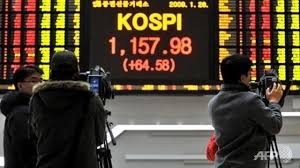
The benchmark Korea Composite Stock Price Index (KOSPI) added 9.08 points, or 0.45 percent, to 2,039.35. Trading volume was heavy at 944.36 million shares worth 4.61 trillion won (US$4.07 billion), with gainers beating decliners 468 to 334.
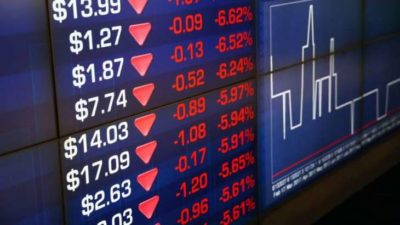
Market watchers said major exporters in the auto and tech sectors advanced to support the overall market, while their gains were offset by losses in the steel and heavy industries as weak Chinese growth data fueled concerns over the global economic outlook.
“The KOSPI rose as pension funds heavily bought recently battered stocks, with foreign investors following suit,” said Kim Jung-hyun, an analyst at Shinhan Investment & Securities.
“But the upturn is expected to be limited due to lingering uncertainties surrounding the Chinese economy and the timing of a U.S. interest rate decision.”
Institutions and foreigners bought a net 71.99 billion won and 32.93 billion won, respectively, while retail investors dumped a net 131.63 billion won.
Auto shares rose on the back of the weakening local currency against the U.S. dollar, which usually boosts profitability of Korean automakers.
Top carmaker Hyundai Motor edged up 0.93 percent to 162,500 won, and its sister company Kia Motors increased 1.88 percent to 54,100 won.
Coway, a water purifier company, jumped 4.26 percent to 90,500 won after local media reported that CJ Group formed a consortium with Chinese appliance maker Haier Electronics Group to buy a 30.9 percent stake in the company, a deal estimated at up to 3 trillion won.Hyundai Securities dipped 4.1 percent to 7,250 won after Japanese private equity firm Orix gave up its bid to buy the indebted brokerage house after a drawn-out negotiation process.
The local currency ended at 1,131 won against the greenback, down 10 won from Monday’s close, as the U.S. dollar strengthened against major currencies after China said its economy grew 6.9 percent on-year in the third quarter, the slowest gain since early 2009.
Bond prices, which move inversely to yields, closed lower. The yield on three-year Treasurys added 1.8 basis points to 1.640 percent and the return on the benchmark five-year government bonds added 2.6 basis points to 1.804 percent.