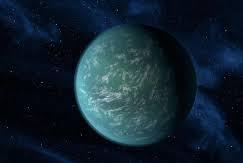
WASHINGTON: On analyzing the data from the Hubble Space Telescope and NASA’s Kepler planet-hunting space observatory, NASA scientists have said that many Earth-like worlds are still waiting to be born. The theoretical study appearing this week in the Monthly Notices of the Royal Astronomical Society suggests that there are still 92% of the Earth-like planets that are yet to born.
Peter Behroozi, of the Space Telescope Science Institute (STScI) in Baltimore, Md., said that the main aim of conducting the research was to understand the Earth’s place in the context of the rest of the Universe. Researchers said that the Earth was an early arrival in the time span of the Universe compared to all the planets that will ever form in Universe. With the help of information provided by the Hubble and Kepler, scientists have also been able to gain insight into the chronicle star formation that took place at a rapid rate some 10 billion years ago.


There is still enough gas and material left in the Universe to make stars and the Earth-like planets for long time, said STScI co-researcher Molly Peeples. Currently, around 1 billion Earth-like planets in the star’s habitable zone are also present everywhere in our Milky Way galaxy. Researchers consider themselves as lucky for having powerful instruments like Hubble and Kepler to study the universe from almost the point of the Big Bang up through the early formation of galaxies.