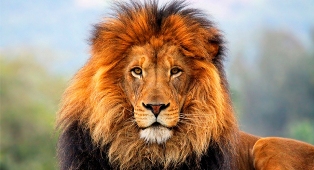
MALI: The lion, perhaps the most iconic species of African wildlife, is disappearing from large parts of the African continent and the decline is most apparent in Western Africa, new research has shown.
In that region the population of lions could drop by half in the next 20 years unless conservation efforts are increased, study researchers say.


“A lot of the African bush is now silent of the lion’s roar,” says study co-author Luke Hunter, president of big cat conservation organization Panthera. “We’re losing that characteristic emblem of African wilderness.”
Lion populations are being threatened by destruction of habitat, loss of food prey, conflict with human settlements and hunting or poaching, the researchers say in their study appearing in the Proceedings of the National Academy of Sciences.
Only in areas of intense conservation management are lions holding their own, they write, mostly in southern Africa countries like Zimbabwe, Namibia, Botswana and South Africa.
In those countries many lions live in well-funded reserves in intensely managed groups, often surrounded by sturdy fences designed to keep the animal in while keeping people out.
In Western and especially East Africa, in contrast, lions roam freely over the countryside as they have done for millennia.
In 1980 an estimated 75,000 lions roamed free in Africa, but the International Union for Conservation of Nature says it estimates only around 20,000 remain.
An ongoing problem is a lack of funding in many countries for lion conservation and management programs.
“We have written hundreds of papers on how to conserve lions,” says study lead author Hans Bauer of the University of Oxford’s Wildlife Conservation Research Unit. “We know how to do it, it’s just not a priority for governments and donors.”
That doesn’t bode well for the future of Africa’s lions, says Laurence Frank, a lion conservation expert and zoologist at the University of California, Berkeley, who was not involved in the study.